Freiamt, Germany

Freiamt, Germany

  • Target: 100% reliance on renewable sources for power and heat.
  • Status: Achieved - Freiamt consumes 12,000 MWh annually and generates 15,400 MWh annually with renewable resources.
  • RES: Wind power, biomass, biogas, solar, hydropower and a district heating system.
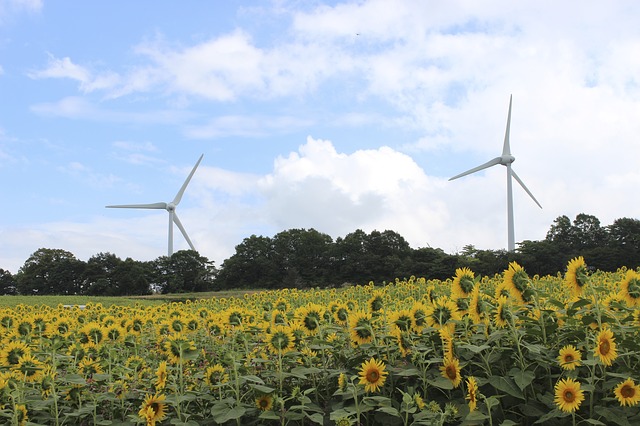
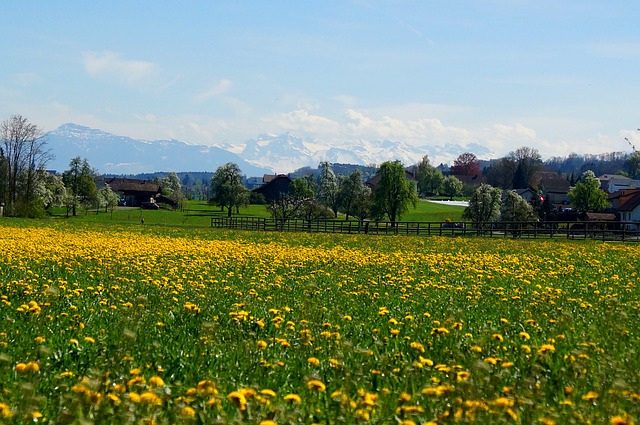
  • Implementation: Freiamt is a small township consisting of of five small villages located in Germany's Black Forest, in the southwestern state of Baden-Württemberg. Taking advantage of laws that incentivize renewable energy, such as the feed-in tariff (Renewable Sources Act), this town uses a variety of renewable energy resources to produce more electricity than it needs—and makes profit by selling the excess to surrounding areas. Freiamt has also made progress in shifting to renewable sources for space heating and hot water. As of 2009, 120 homes were heated using efficient wood pellets, 75 homes used wood chips, and 150 homes used solar thermal collectors. The town aims to increase its renewable heating use, as well as to shift to renewables for transportation. Like many other German towns, Freiamt uses a mix of solar, wind, and biomass, with some hydropower. Local biomass provides fuel for its district heating system.
    The township achieved their 100% target via a series of small steps. This was so locals would become familiar with the technologies and their benefits over time. Any objections can be raised. They began with community cooperative projects. First a wind farm with two turbines was built. Local people were able to buy shares in the turbines, at minimum price of €3,000 (US$4,170). Then came the installation of solar arrays, with a PV array on town hall, and then on roofs of farm buildings. Today farmers own around 300 solar PV systems plus 150 solar thermal collectors being used for water heating. By combining solar PV and wind power, the township is able to balance the energy supplies due to changing weather conditions. The solar panels are able to provide power during times when wind speeds are low but the sunshine is strong. In addition to solar, small biogas co-generation plants were also installed by farmers. The plants convert agricultural waste to methane, which is burnt to provide heating for homes, or run turbines to generate more electrical power.
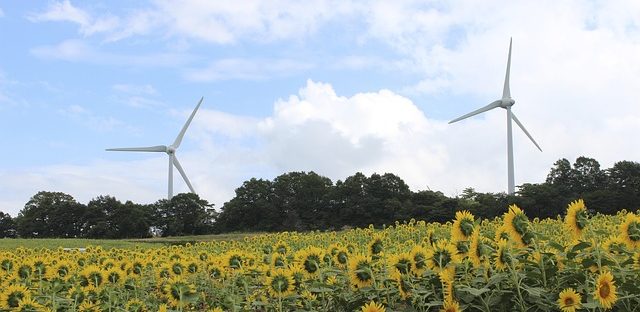
    Overall, the mix of renewable energy systems has been a success. Today there are five wind turbines that makes the township not only 100% renewable, but also an energy exporter. The township now produces about 14 million kWh of energy annually — about 3 million more than needed.
  • Population: 4,187 (2017)
  • Area: 52.92 km2 (20.43 sq mi)
  • Link: https://www.freiamt.de/buerger/de/unsere-gemeinde/gemeinde/erneuerbare-energien/
Freiamt, Germany

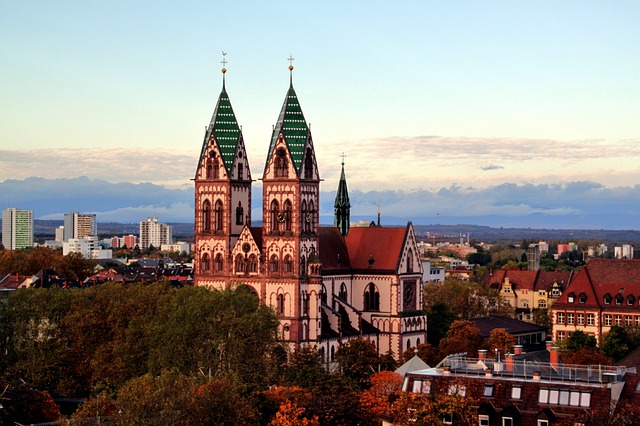
Freiburg im Breisgau, Germany

Freiburg im Breisgau, Germany

  • Target: Freiburg Green City, using 100% renewable energy by 2050.
  • Status: In progress
  • RES: Net-zero and passivhaus building practices, combined heat and power (CHP) generation, solar thermal and photovoltaics systems, and a district heating grid to provide domestic heating and hot water.
  • Implementation: Freiburg is located in south-west Germany, near the borders with France and Switzerland. It is home to universities, public research institutions and has one of Germany’s sunniest and warmest climates. The city has a population with a large proportion of whom are Green Party voters. Since the 1972 Anti-nuclear protests, citizens have pursued sustainable energy standards often above and beyond those set by the German federal government. In 2003, citizen groups began preparing a plan for the municipal council, which eventually became the backbone of Freiburg’s Land Use 2020 plan. The plan brought together community shareholders and civic officials. The focus would be threefold: energy savings, efficient technologies, and renewable energy sources. Action plans were detailed in relation to transportation, waste, water and energy sectors. Today, the Freiburg Environmental Policy provides short, mid and long-term goals for planning, development, and conservation for sustainability and efficiency.  These aspects govern Freiburg’s urban planning process in such a way that most development, or re-development, projects go far beyond the minimum energy standards and installation of renewable energy generation to also include net-zero and passivhaus building practices, combined heat and power (CHP) generation and a district heating grid to provide domestic heating and hot water.
  • Population: 229,636 (2017)
  • Area: 153.07 km2(59.10 sq mi)
  • Link: https://www.theguardian.com/environment/2008/mar/23/freiburg.germany.greenest.city
Freiburg im Breisgau, Germany

Freisingerland, Germany

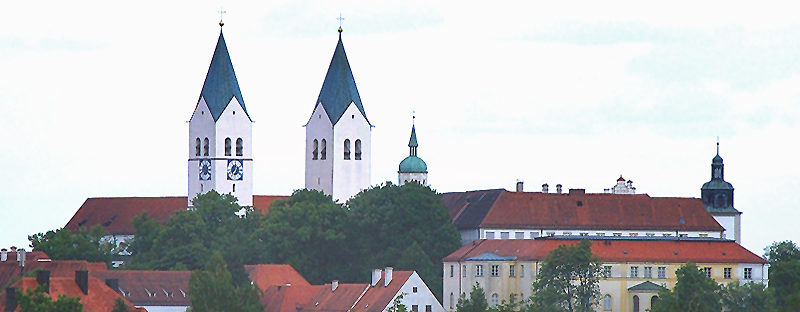
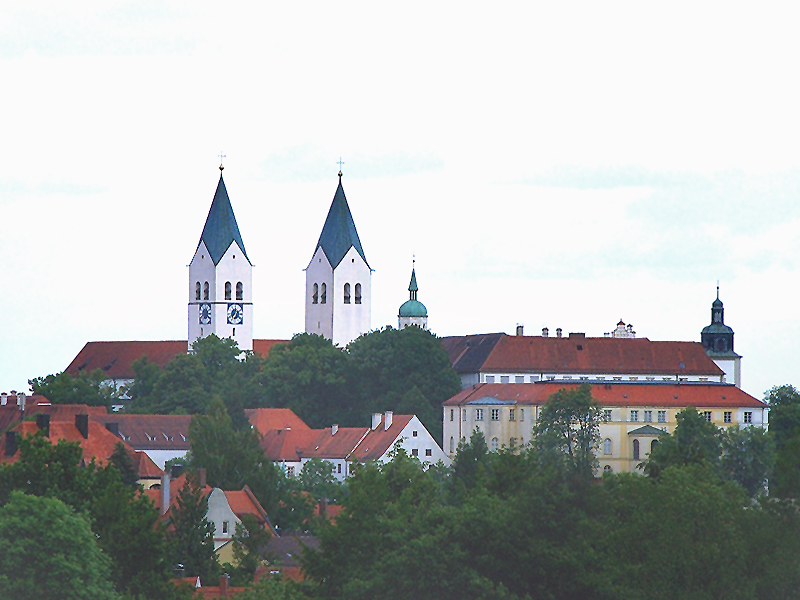
Mariendom, Freising, Germany

  • Target: 100% renewable electricity target by 2035
  • Status: In progress
  • RES: Solar energy
  • Implementation: In 2005, 24 municipalities in the district of Freising, north of Munich, Germany decided to create the “Solar Region Freisingerland” with the target of 100% renewable electricity target by 2035. The idea was implemented together with many associations and organizations from the district. By establishing a cooperation agreement between "Sonnenkraft-Freising" as initiator and "Freisinger Land" (the regional marketing initiative at the time) as partner, the idea was able to be launched effectively. Though this initiative, the “Solar-Kreisliga” competition involving the municipalities was set up to stimulate the shift to renewable energy in the region. Towns would compete to attain the highest renewable energy generation compared with their recorded electricity consumption.By 2010, 6 municipalities had reached their 100% renewables electricity goal and were named energy champions. At this time, the region was already producing 54.6% electricity from renewables. The results were promoted via regular energy brochures and today, latest results are distributed to all political leaders in the district. Recently the "Bürgeringerergiegenossenschaft Freisinger Land" was established as a county-wide institution to assist citizens to better transition to renewable energy. It is estimated that if recent activities in renewable energy continue, the solar region could reach their goal of 100% renewables electricity by 2020. 
  • Population: 164,692 (2007)
  • Link: Solarregion Freisinger Land
Mariendom, Freising, Germany

Fukushima, Japan

Fukushima, Japan

  • Target: Cover a minimum of 100% of primary energy demand with renewable resources by 2040
  • Status: In progress
  • RES: Windpower, solar thermal heating, photovoltaics, biomass for power and heating, geothermal energy, and hydropower.
  • Implementation: The prefecture of Fukushima is located in the Tōhoku region on the east coast of Japan on the island of Honshu. The Great East Japan earthquake and subsequent tsunami and disaster at the Fukushima-Daiichi nuclear power plant in March 2011 motivated the people of Fukushima to re-examine their energy system and ways of restoring industry in the shattered region. This led to the vision of transitioning to renewable energy as a way forward. Fukushima now has officially committed to cover a minimum of 100% of primary energy demand in Fukushima with renewable resources by 2040. Part of this plan involves taking advantage of strong offshore wind by building a large floating wind farm off the coast of Fukushima. The total cost of the farm is estimated to be  ¥18.8 billion (approx. $189 million USD). Still, the first 2 MW turbine was delivered in 2013. In 2015, Phase 2 was completed, bringing online two 7 MW wind turbines.

    By 2020, the goal is to have 143 large wind turbines totalling 1 GW in capacity 10 miles off the Fukushima coast. The massive size of turbines will call for them to be locally constructed, which means local jobs in manufacturing and maintenance. With its existing automotive and airplane industries, useful components to the wind turbine industry will be available. The Fukushima plan also envisions other technologies and resources, including solar thermal heating, photovoltaics, biomass for power and heating, geothermal energy, and hydropower. Fukushima Prefecture has held several educational and industry events to attract support for its renewable energy plan.
  • Population: 1,877,876 (2018)
  • Area: 13,782.76 km(5,321.55 sq mi)
  • Link: https://www.japantimes.co.jp/news/2018/03/11/national/fukushima-powers-toward-100-goal-renewables-grid-cost-woes-linger/#.XHP93C2ZOIY
Fukushima, Japan

Georgetown, Texas, USA

Georgetown, Texas, USA

  • Target: Powered by 100 % renewable energy.
  • Status: Achieved
  • RES: Solar and windpower.
  • Implementation: The city of Georgetown in Texas is powered by 100 % renewable energy  through long-term deals to supply the city with solar and wind power. The decision was made when it was found that renewable energy would be cheaper and more reliable than fossil fuels. The cost of solar panels had fallen by more than 63 % since 2010, with wind showing similar declines. The intervention would secure fixed electricity rates similar to the current rate of about 9.6 cents per kilowatt-hour and would protect the city against fluctuations in the price of fossil fuels. Renewables would require much less water use than traditional power generation, which is a great advantage in drier states such as Texas. Investing in the city’s own renewable energy sources would also create great local economic opportunities. Many companies, especially those in the high-tech sector, have invested in green sources of power for their office and manufacturing facilities. Georgetown’s 100% renewable power supply have helped companies achieve their sustainability goals at a competitive price. A major success has been the city's agreement with SunEdison, a multinational solar energy company, to purchase the power generated from a 150MW solar farm. The deal with SunEdison will be enough to power more than 24,000 homes every year for the next 25 years. Coupled with a 2014 agreement with EDF to purchase a 140-megawatts wind power plant, Georgetown will be able to meet all of its electricity needs without coal, oil, natural gas, or nuclear power.
  • Population: 55,716 (2014)
  • Area: 54.3 sq mi (141 km2)
  • Link: https://www.theguardian.com/environment/2015/mar/28/georgetown-texas-renewable-green-energy
Georgetown, Texas, USA

Gothenburg, Sweden

Gothenburg, Sweden

  • Target: Fossil free by 2050
  • Status: In progress
  • RES: District heating, solar and wind power
  • Implementation: In the early 1990’s, Sweden shifted from oil to district heating. This helped to reduce the country’s greenhouse gas emissions in the housing and service sectors. Today, over 80 per cent of the heat and hot water provided to the country's apartment blocks come from district heating. By heating and cooling buildings from a central plant source, more sustainable and clean forms of fuel can be used. Many district heating networks are making use of recycled heat from industries – energy that would be wasted.

    Gothenburg is Sweden’s second-largest city. It has a 1,200 kilometres long district heating network, which heats 90 per cent of the city’s apartment blocks as well as 12,000 detached homes. Today, over 80% of the heat in the system is based on waste heat and recycled energy. When municipal-owned Gårdstensbostäder acquired Gårdsten in the late 90s, they managed to redevelop 500 apartments into solar houses. The apartments are also self- sufficient by wind power. The city has also enabled through its electric utilities policies, the option for consumers to buy into the eco-labeled district heating.
  • Population: 572,779 city, 1,015,974 metro (2016)
  • Area: 447.76 km2 (172.88 sq mi) city, 3,694.86 km2(1,426.59 sq mi) metro
  • Link: Fossil Free Gothenburg (PDF in Swedish)
Gothenburg, Sweden

Gotland, Sweden

Gotland, Sweden

  • Target: Climate-neutral energy supply by 2025
  • Status: In progress
  • RES: Wind power
  • Implementation: The Swedish Island of Gotland is committed to having a climate-neutral energy supply by 2025. The objective is to use 100% local, renewable resources to meet all of the energy demand for households and business on Gotland, except for industrial fuels. Gotland has implemented an array of innovative renewable energy projects.  This is largely due to it having the highest sunlight strength in Sweden, is one of the top wind locations in Europe, and has good access to biofuels. The municipality's sustainability initiative already began in the early 1990s, with the aim of creating a sustainable society by 2025. This would not only apply for the energy sector, but also for all resources, agriculture, and waste. Since then, the municipality has already cut its CO2 emissions from fossil fuels nearly in half.  A quarter to half of the entire island's annual electricity demand is met with wind power, and heating is produced with biofuels from local forests. In 2010, Gotland installed its first biogas station for fueling cars and buses, which today totals four stations. In 2017, the first public filling station for HVO was opened. There are also several loading stations for electric vehicles across the island. Wind power development has since grown but existing sea cables have been found to be limited in capacity. The Swedish Government's National Energy Agency is conducting a feasibility study on Gotland as a pilot case for a renewable energy system smart grid to address this challenge.
  • Population: 58,595 (2017)
  • Area: 3,183.7 km2 (1,229.2 sq mi)
  • Link: Island of Gotland is Home to Sustainable Energy System Pilot Project
Gotland, Sweden

Grand Rapids, Michigan, USA

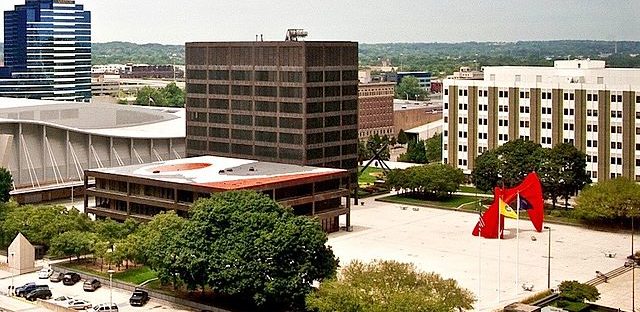
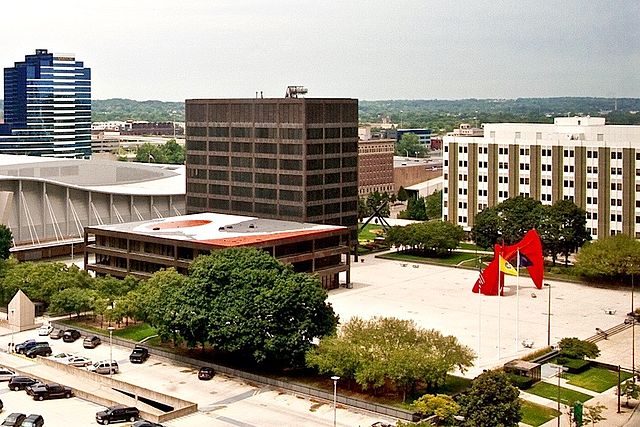
Calder Plaza, Grand Rapids, Michigan, USA

  • Target: To become a fossil fuel free city, at least in the electricity sector, by 2020.
  • Status: In progress
  • RES: Solar photovoltaic systems, and geothermal systems.
  • Implementation: Grand Rapids is one of the most populous cities in the US state of Michigan.  In 2010, the electricity production was mostly based on coal burning power plants and about 20% came from renewable energies. To achieve the 100%-RE target in the electricity sector, as announced by the mayor in 2005, Grand Rapids has implemented several RE projects. In 2010, the US Department of Energy awarded the city a ‘Congressially Directed Project Grand’. The city has since received financial support to implement photovoltaic systems. It has installed geothermal systems at two fire stations in the city. The US Environmental Protection Agency has also provided financial support to convert a former landfill site into a large scale solar photovoltaic farm.
  • Population: 198,829 (2017)
  • Area: 45.31 sq mi (117.35 km2)
  • Link: https://www.experiencegr.com/about-grand-rapids/green-grand-rapids/
Calder Plaza, Grand Rapids, Michigan, USA
  • Calder Plaza, Grand Rapids © Steven Depolo CC BY 2.0

Greensburg, Kansas, USA

Greensburg, Kansas, USA

  • Target: 100% renewable energy
  • Status: Achieved
  • RES: Wind farm, small solar installations and biogas and biodiesel generator, LEED Buildings, geothermal heating, charging stations for electric vehicles.
  • Implementation: Greensburg is a small rural town in Kansas, USA. It is a story of triumph from tragedy. In 2007, a tornado hit Greensburg and severely damaged or destroyed 90% of its structures. Shortly after this tragedy, the community, led by Mayor Bob Dixon decided to rebuild Greensburg as a sustainable community. A 'Long-Term Community Recovery Plan' was developed in 2007 and in 2008 Greensburg residents developed a 'Sustainable Comprehensive Plan' for the city’s next 20 years that would focus on cost-effective energy efficiency and on operating with 100% RE. Today, Greensburg Wind Farm supplies 12.5 MW of RE to the town. The RE production is complemented by small solar installations, while biogas and biodiesel generators are used for emergency backup. The town uses only about 1/3 of the power generated and excess power is fed back to the grid and offered as RE credits for other customers. Greensburg's Plan mandated that all city-owned buildings had to achieve the U.S. Green Building Council’s LEED Platinum rating. This has resulted in 42% energy savings, with 13 community buildings saving a combined total of USD$200,000 in energy costs per year. Also many private buildings are exceeding 40% in energy savings. For the transport sector, the city encourages alternative and efficient transportation options, more pedestrian activity and promoting charging stations for electric vehicles. The creation of the Greensburg Plan essentially involved a range of stakeholders through many community meetings. It included city leaders, business owners, non-profit organisations (e.g. Greensburg Green Town), residents as well as experts from the U.S. Department of Energy (DOE) and the National Renewable Energy Laboratory (NREL). To implement Greenburg's Plan, the DOE/NREL team helped identify key steps: bringing stakeholders together, choosing the right leaders, creating a common vision, having goals, finding funds and writing an energy plan.
  • Population: 777 (2010)
  • Area: 1.48 sq mi (3.83 km2)
  • Link: http://www.greensburgks.org
Greensburg, Kansas, USA

Großbardorf, Germany

Großbardorf, Germany

  • Target: 100% renewable energy
  • Status: Achieved
  • RES: A solar photovoltaics farm, a biogas plant, a cogeneration plant and a district heating network.
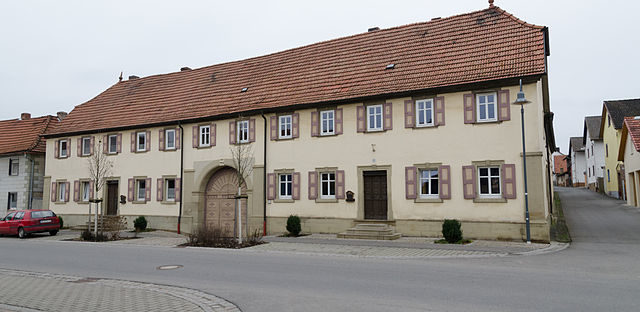
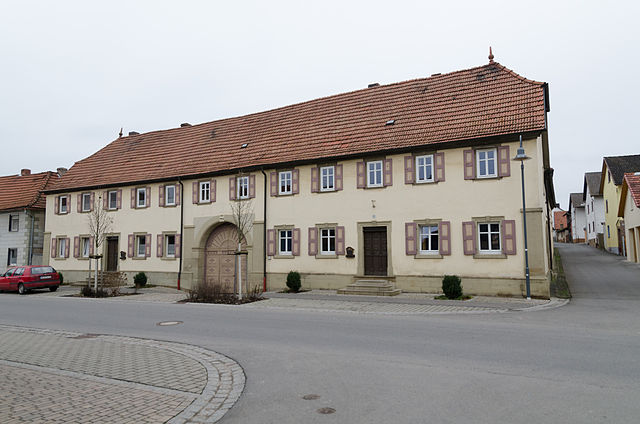
  • Implementation: In the small Bavarian village of Großbardorf, local citizens invested and raised outside capital worth $19 million over four years to develop rooftop and larger scale solar systems, along with a biogas plant that feeds both a combined heat and power (CHP) plant and a district heating network. Combined, the projects generate 400% of the electricity the village’ needs and 50% of its heating demand. Großbardorf is considering expanding to new business opportunities that rely on its advanced heating network. One example is local fish farming tanks that use heat from the biogas plants to heat the water. Its citizens have also participated in Großbardorf's energy efforts in other ways. The community for example decided to invest in solar panels for the new roof of the town’s football stadium in  exchange for season tickets to games. The income from the electricity produced by the solar panels would pay off the expense of the new roof. The village's renewable energy success would not have been possible without the Renewable Sources Act (EEG), the German feed-in tariff (FIT). The law guarantees interconnection of renewables into the grid, payment of any needed grid upgrades by the utilities, and adequate, long term payment to renewable power generators for any electricity they feed in to the grid.
  • Population: 889 (2017)
  • Area: 16.54 km2 (6.39 sq mi)
  • Link: Energie-Kommune des Monats: Gemeinde Großbardorf
Großbardorf, Germany