Güssing, Austria

Güssing, Austria

  • Target: 100% renewable energy self-sufficiency.
  • Status: Achieved
  • RES: Biomass cogeneration and district heating system.
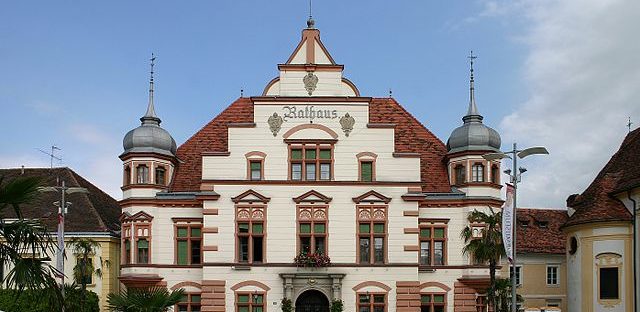
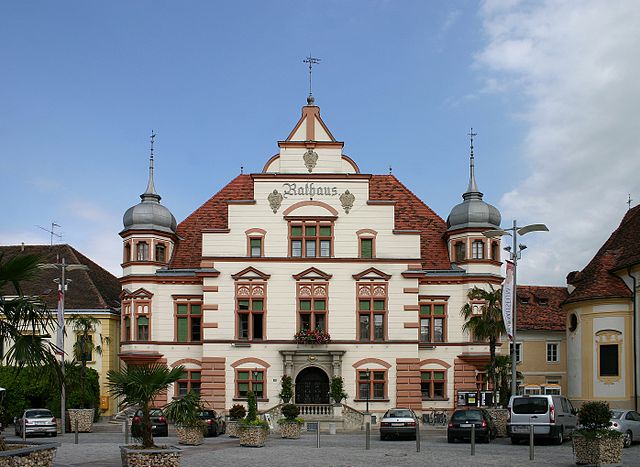
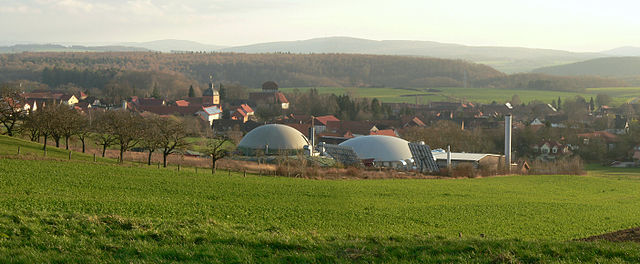
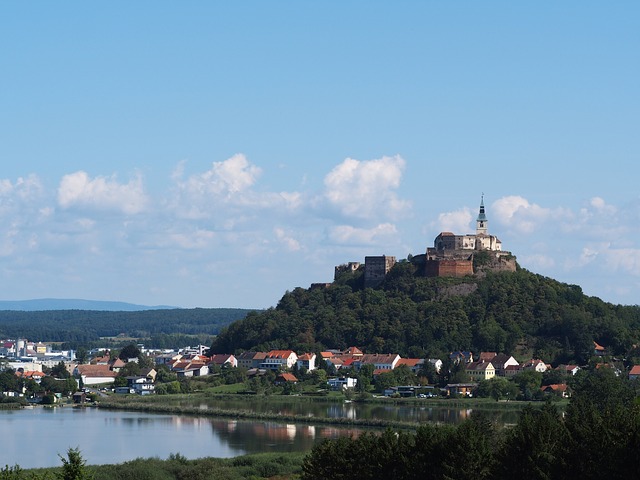
  • Implementation: Güssing is a small town in Austria, near the Hungarian border. Years ago, the town was struggling to pay for energy costs, today it is a trendsetter in the production renewable energies, particular in biomass gasification technology. Güssing implemented a renewable energy plan as part of an overall regional economic development and re-development plan. It started with a energy efficiency program in 1990, the town laid out plans to keep jobs and money in the area by taking ownership of their energy usage and production. The municipality would switch all the streetlights to LED and retrofit all the public buildings with new windows and insulation over a decade. The town also decided to stop using power produced by fossil fuels. Güssing’s agricultural and forestry provided the organic material for fuelling the community operated biomass district heating grids and in 2001, it began producing electricity and biogas in the world’s first functioning FICFB (Fast Internally Circulating Fluidized Bed) plant. Güssing’s success has let the way for the entire region of Burgenland to follow as energy prosumers. In 2013, the entire region produced enough locally produced electricity to cover demand. Güssing itself has become a tourist attraction for the renewable energy field, experiencing several hundred ecotourists a year. There have also been a substantial amount of businesses being established in, or have moved to, the region, resulting in an increase of local employment. The town now has 60 new companies, 1,500 new jobs, and annual revenues of $17 million due to energy sales. Güssing’s successes also attracted R&D, in particular was the foundation of the European Center for Renewable Energy founded in 1996 and remains central to Güssing's renewable energy industry today.
  • Population: 3,660 (2016)
  • Area: 49.31 km2 (19.04 sq mi)
  • Link: https://pocacito.eu/sites/default/files/ModelGüssing_Güssing.pdf
Güssing, Austria

Hartberg, Austria

Hartberg, Austria

  • Target: 100% CO2 neutral by 2020.
  • Status: Achieved
  • RES: District heating system, biomass energy, and solar thermal and photovoltaic panels on all roofs.
  • Implementation: The city of Hartberg in Austria has set a 100% CO2-neutral target to include all buildings, industry as well as private households. The target is based on the CO2-neutral concept, elaborated by Joanneum Research, which had shown that a non-carbon society is not only necessary to mitigate climate change, but can also be extremely beneficial in terms of local added value. For the past 20 years, several measures have been implemented by the city.  In 2015, many important milestones were achieved, including supplying heat to all buildings through a district heating system that runs on woodchips, purchasing only renewable electricity from hydro-, wind- and solar power stations,  installing as much solar-thermal energy as possible and covering all available roof-surfaces with photovoltaic-cells. The involvement of different stakeholders was instrumental in Hartberg's success. Discussions were extensive and included private individuals, universities, energy experts, car-sharing providers, e-car pioneers, biogas pioneers, and so forth. However the most important partners in such a project were the local politicians, the local authorities, the district heating supplier and a local utility company.
  • Population: 6,534 (2016)
  • Area: 21.58 km2 (8.33 sq mi)
Hartberg, Austria

Ithaca, NY, USA

Ithaca, New York, USA

  • Target: 100% renewable energy
  • Status: In progress
  • RES: Varied (via renewable energy certificates)
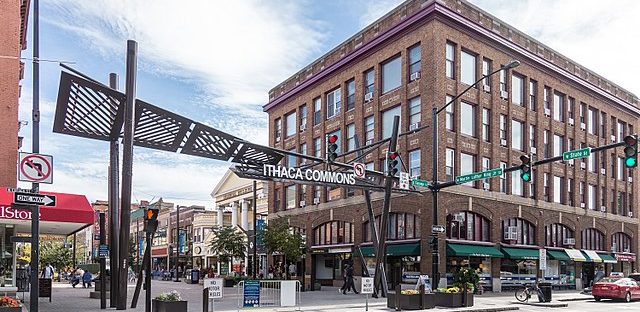
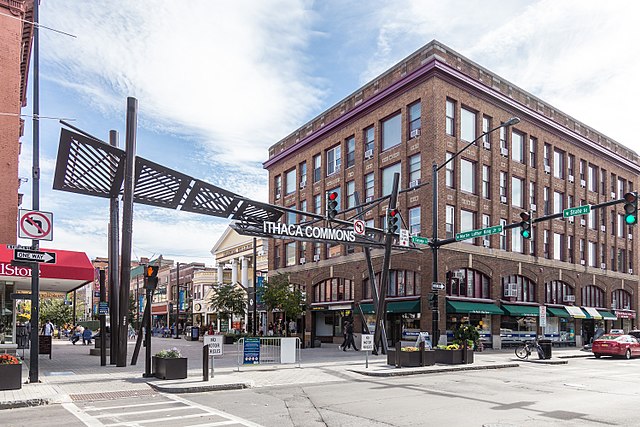
  • Implementation: In January 2012, the City of Ithaca, NY began purchasing Green-e Energy-certified renewable energy credits (RECs) to cover all the electricity demand of its municipal buildings, street lights and traffic lights with renewable electricity. The REC purchase was conducted through Municipal Electric and Gas Alliance Inc. (MEGA), a non-profit aggregator of gas and electricity in which Ithaca participates. Energy aggregators like MEGA bundle participants in order to be able to build buying power and bid for lower prices. In purchasing RECs, the city has helped increase the market for renewable-sourced generation facilities, decrease the generation of greenhouse gases, and offset the city government's emissions. In February 2012, following the implementation of the RECs contract, the City joined EPA's Green Power Partnership program committing to continue to pursue and support renewable energy sources. The city already has a history of implementing renewable energy projects. In 1996, the city installed a geothermal heating and cooling system at the Ithaca Youth Bureau building, which is still being used today, thus reducing energy costs and the use of fossil fuels for heating/cooling. In 2011, the city was awarded a grant to install solar thermal hot water systems on 2 city buildings.
  • Population: 53,661 urban, 101,564 metro (2010)
  • Area: 24.581 sq mi (63.66 km2) urban, 474.649 sq mi (1,229.34 km2) metro
  • Link: https://www.cityofithaca.org/425/Energy
Ithaca, New York, USA

Jühnde, Germany

Jühnde, Germany

  • Target: 100% renewable energy
  • Status: Achieved
  • RES: Mainly bio-energy, some solar photovoltaics.
  • Implementation: Wildpoldsried is a small village located in Lower Saxony in Northern Germany. In 2006, Jühnde became the first village in Germany to be energy self-sufficient. The municipality is using 25% of municipal farmland and 10% of forest land to supply 100% of its heating and more than 200% of its electricity needs with bio-energy, such as methane from cow manure and wood chips. Jühnde, like many other German towns that have successfully achieved high uptake of renewables, has benefited from the German Feed-in Tariff Law or Renewable Sources Act (EEG), which encourage robust investment in renewable technologies, like solar, wind, biomass, geothermal, and small hydro, including local participation. In Germany, the majority of installed renewable energy is owned by citizens, farmers, and small businesses.
  • Population: 985 (2017)
  • Area: 24.49 km2 (9.46 sq mi)
  • Link: (Also in English) http://www.bioenergiedorf.de/home.html
Jühnde, Germany

Kisielice, Poland

Kisielice, Poland

  • Target: 100% renewable electricity
  • Status: Achieved - The town achieved the 100% target in September 2014.
  • RES: Three windfarms, a biomass CHP plant, a biogas power plant, and a district heating system.
  • Implementation: The small town of Kisielice in northern Poland is an extraordinary example of local energy transformation. It is a pioneering model for a country which relies 90% on coal for the generation of electricity. The town achieved its 100% target in 2014 by adopted small, localised solutions. Part of the town electricity is delivered by two wind farms which together consist of 50 wind turbines with a total capacity of 94.5MW. A third 24MW wind farm is under construction and already partly operating. Local farmers get an extra income of about 5,000 €  per year for the lease of each wind turbine installed on their land.  A 6MW biomass CHP plant generates electricity by burning cereal straws which are purchased from local farmers. The plant is connected to a district heating system which provides heating to 250 buildings, i.e. serving more than 90% of the local population. When the construction of a biogas power plant driven by silage corn was completed in December 2013, the town was able to produce an extra 1 MW of heat and 1 MW of electricity. Since then, the municipality is planning to invest in a solar PV farm as well as financing local micro solutions such as small wind turbines, roof solar panels and heat pumps for local residences.
  • Population: 2,183 (2017)
  • Area: 3.37 km2 (1.30 sq mi)
  • Link: https://cleantechnica.com/2014/09/18/polish-town-100-renewable-energy/
Kisielice, Poland

Knežice, Czech Republic

Kněžice, Czech Republic

  • Target: 100% renewable energy
  • Status: Achieved
  • RES: Biogass and biomass plants
  • Implementation: Knežice is a small village located around 80 km from Prague)  in the Czech Republic. Today it is energy self-sufficient thanks to a bioenergy facility, which consists of a biogas plant with CHP (330 kWel and 400 kWth) and a biomass heating plant (boilers 800+400 kW). The technology supplies the population with more than 90% heat and produces significantly more electricity than the village consumes, so that electricity can be sold. Additionally, the use of biogas units solves the problem in Knežice of organic waste processing. The centre operated by the municipality also produces pellets for heating houses in the neighbouring area. The village has also won the Czech solar award from EUROSOLAR and is beginning to promote its successes in a new information centre in a former mill. It also leads a micro-region of five municipalities that have recently signed the Covenant of Mayors (CoM) and are preparing a joint SEAP. The major driving force of events is mayor Milan Kazda.
  • Population: 510 (2006)
  • Area: 7.56 sq mi (19.57 km2)
  • Link: http://www.nupharo.com/community/knezice-village
Kněžice, Czech Republic

Kötschach-Mauthen, Austria

Kötschach-Mauthen, Austria

  • Target: 100% energy autonomous by 2020
  • Status: In progress -  To date, the energy-self-sufficiency coefficient (the ratio between regional energy demand and regional renewable energy generated) is around 75%.
  • RES: 21 small hydropower plants, 3 ecological storage lakes, 4 district biomass heating plants, 1 windpower plant, 1 biogas plant, several big and private photovoltaic and solar power plants.
  • Implementation: Since 2007 Kötschach-Mauthen in Austria has been known as an energy autonomous (energy independent) community. The town has a very long history in renewable energy, with the first waterpower plant built in 1886. By 2008, the “energie:autark Kötschach-Mauthen” association had been founded. The community  joined the Climate Alliance and the energy efficient communities program of the European Energy Award (known as e5-program in Austria). In 2012, the town was awarded with the European Energy Award ® Gold and five “e” in the e5-program. Today, there several different types of renewable energy installations. The town conducts guided tours for tourists, researchers and school groups  which combines nature experiences with visits to regional product centers and RES installations
  • Population: 3,459 (2016)
  • Area: 154.48 km2 (59.65 sq mi)
  • Link: https://www.energie-autark.at/show_content.php?sid=95
Kötschach-Mauthen, Austria

Kronprinzenkoog, Germany

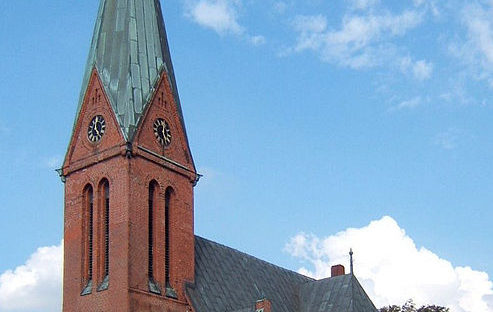
Neo-gothic church, Kronprinzenkoog, Germany

  • Target: 100% renewable energy
  • Status: In progress
  • RES: Solar photovoltaics and biogas plants
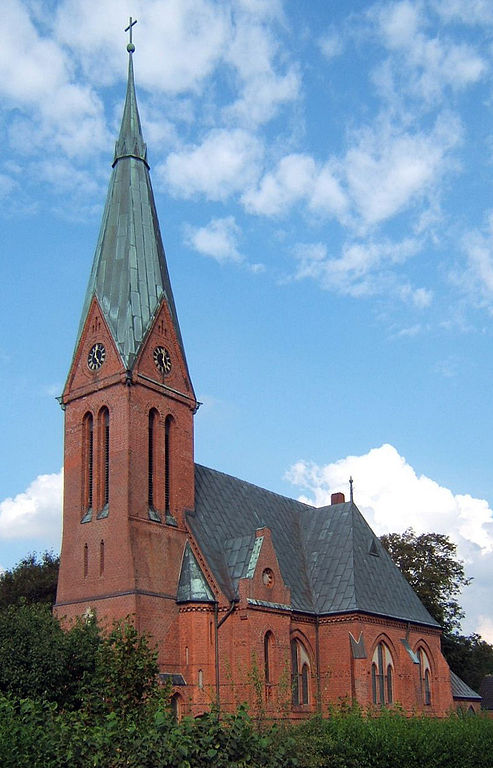
  • Implementation: Kronprinzenkoog is a small town in the Dithmarschen district near the North Sea in Germany. In the 1980s, the town installed its first wind turbines. In 2009, the 150 kW-500kW 77 turbines were replaced with more powerful, more efficient 2-3 MW models. Today, these windmills feed about 200 million kWh into the grid, enough to power 50,000 German homes. Two of the windmills are collectively owned by 140 villagers who had invested 3.6 million euros and who are now receiving a 15-20% return on their investment. The good returns can be attributed to the German feed-in tariff law (The Renewable Sources Act also known as the EEG) which guarantees that anyone in Germany who produces renewable electricity will be paid a fixed rate for the type of renewable electricity they feed into the grid for 20 years. This law also guarantees access of renewable energy projects into the grid and makes utilities pay for any necessary grid upgrades. In other words, the EEG allows regular people to become power producers and get paid properly. In addition to the feed-in tariff law, highly efficient and simple permitting processes for renewable electricity speeds up installation. The town has also implemented a 500 kW biogas plant on a farm, which produces enough energy to power 3,200 households, and 7,117 kW of solar PV have also been installed  in recent years. Most solar roofs are paid back within 10 years, after which owners get to keep the profits. To move towards renewable transportation, the town has opened an electric bike/car rental facility powered by a solar rooftop, and is planning several solar powered electric charging stations along the whole German north coast.
  • Population: 811 (2017)
  • Area: 28.85 km2 (11.14 sq mi)
  • Link: https://www.shz.de/lokales/norddeutsche-rundschau/kronprinzenkoog-ist-sonnenstark-id1064511.html
Neo-gothic church, Kronprinzenkoog, Germany

Kuzumaki, Japan

Kuzumaki, Japan

  • Target: 100% renewable energy
  • Status: Achieved
  • RES: Wind power and solar power
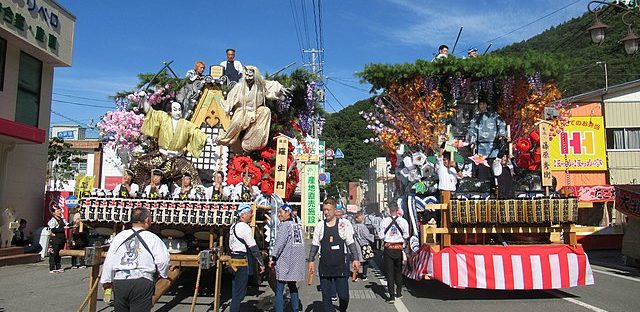
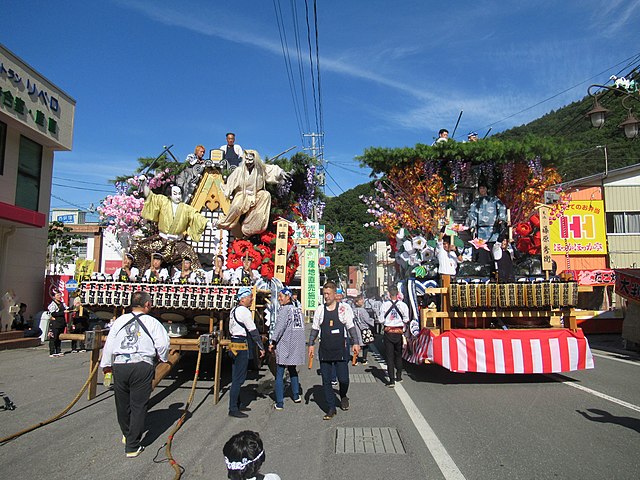
  • Implementation: In 2005, the Japanese town of Kuzumaki officially set the target of producing 100% of its energy needs through local renewable sources. The town council decided to implement several measures to increase awareness and involvement of its residents by holding town meetings, establishing educational tours, and publishing a monthly newsletter. Energy demonstration projects were initiated. In collaboration with private businesses, the city began to promote and implement wind power, biomass plants and other renewables.

    Today, Kuzumaki produces more than 100% of their energy needs through renewable sources. Around 180% of its energy needs is met through local renewable energy Institutional support. A subsidy of 30,000 yen per kW (max of 90,000 yen) is made available for solar PV installation with up to 50,000 yen available for installation of solar heating systems. To address transportation needs, the town offers 50,000 yen subsidies for the purchase of hybrid or electric vehicles. One half of the installation cost (max of 100,000 yen) is also available for installation of wood biomass heating systems (wood chip, pellet stoves). And 100,000 yen subsidies are possible for other renewables such as small hydro and wind power.

    Kuzumaki's road to 100% began in 1999 when the municipality inaugurated its ‘New Energy Vision’ program, with support from the New Energy Foundation (NEF) and the New Energy and Industrial Technology Development Organization (NEDO). Prior to this, the municipality had invested in Eco-World Kuzumaki Wind Power, Ltd. In June 1999, three 400kw-windmills were installed in Sodeyama-kogen Ranch, with enough electricity produced for 900 households, which is sold to the Tohoku Electric Power. Current annual turnover is 28 million yen, and the town also gets property tax income (20 million yen annually, averaged over 15 years). In March 2000, a solar power generator was installed in Kuzumaki Junior High School. This generates 50kw of electricity, but provides 25% of the school’s demand, and also encourages the students to get interested in clean energy. A survey to check wind conditions was conducted over two years and revealed promising sites for wind power generation. In 2001, the Green Power Kuzumaki Wind-Power Generation, Ltd. was founded. In 2002, twelve 1,750kw wind were installed, providing electricity for 16,000 households. The municipality supported the project by helping arrange planning permission and facilitating the procedures prior to the construction phase. In 2000, a feasibility study into bio-mass energy was conducted. In 2002, a generation facility was built using animal manure mixed with kitchen waste to produce methane gas, which is then used for electricity generation. Slurry left from the process is used as fertilizer. Its forests provide a valuable resource for making wood chips, with forestry waste used to make wood-pellet fuel. In Kuzumaki, the local winery uses a boiler with wood-pellet fuel. Another source of energy is hydropower at its ‘Seven Waterfalls’ area. The town also runs a ‘Natural Energy School’, which has its own windmill and solar-power generator.
  • Population: 6,149 (2016)
  • Area: 434.99 km2 (167.95 sq mi)
  • Link: https://www.gef.or.jp/20club/E/kuzumaki-e.htm
Kuzumaki, Japan

Lancaster, California, USA

Lancaster, California, USA

  • Target: Net zero city for electricity use by 2020
  • Status: In progress
  • RES: Solar energy
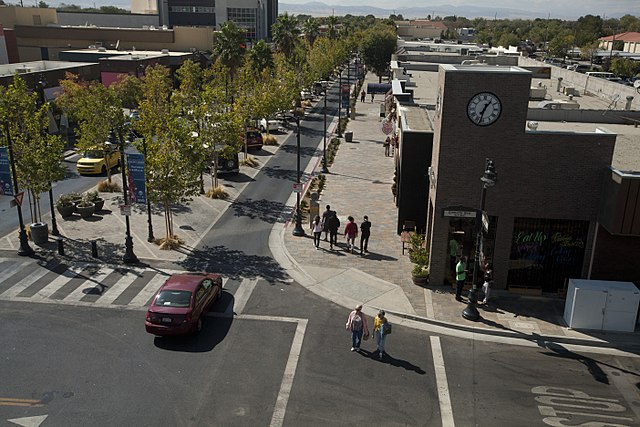
  • Implementation: In 2008, Lancaster Mayor R. Rex Parris initiated the net zero city campaign by launching the “Solar Lancaster” program, an innovative public-private partnership with solar firm SolarCity which enables local residents and businesses to install solar energy systems at a significant cost savings over their existing energy bills. He also led an initiative to streamline and fast-track renewable energy developments of all types, from small single-home installations to larger developments which will provide hundreds of megawatts of renewable energy. In relation to solar permits, Lancaster’s approval process for homeowners wanting to install solar energy was shortened. What usually took weeks or even months in some jurisdictions, now could be performed over-the-counter. Furthermore, zoning adjustments were made to expand the installation of different types renewable energy systems throughout the city. By 2013, a new ordinance was in place requiring new single family residential units been built on or after January 1, 2014 to provide solar-generated power at a minimum average of 1kW per unit.  To date, over 1700 single-family residential solar permits have been issued, and more than 100 homeowners and businesses have taken advantage of the Solar Lancaster program.
    Solar energy systems on six municipal facilities generate 1.5 MW of renewable energy and help save taxpayers approximately $6 million over 15 years. The city’s Lancaster Power Authority, formed in 2011, partnered with Eastside and Lancaster School Districts is installing 7.5 MW of solar energy-producing parking shade structures at 25 school sites. These projects will provide substantial energy savings and generate an estimated revenue of $20 million. Other success stories include the KB-BYD project, which united China-based technology and manufacturing giant Build Your Dreams (BYD) with KB Home to create an affordable solar energy housing community. BYD’s advanced battery technology will provide households with a way to use solar energy and help store the energy for use during nighttime hours or power outages. The City also actively recruits solar developers. The firm First Solar established its 230 MW AV Solar Ranch One in summer 2011, and Lancaster is already home to the nation’s first 5 MW power tower, constructed by eSolar. Other projects include a partnership with US Topco Energy, Inc., a division of Topco Scientific Taiwan, to build 50 MW utility-scale solar systems, and Beautiful Earth Group’s construction of two 19 MW photovoltaic plants. Each plant will be able to annually generate 16 gigawatt hours of electricity, approximately enough energy to power 10,000 homes. In 2013, Antelope Valley Solar Projects began construction of a 579 MW project. This SunPower technology project encompasses more than 3,000 acres and is anticipated to bring approximately 650 jobs to the Antelope Valley. To create a mechanism to spread Lancaster’s success and expertise in the field of renewable energy, the city led the establishment of the California Clean Energy Authority (CCEA). In addition, the City created the High Desert Power Authority (HDPA) to support the transmission of renewable electricity from Lancaster and the surrounding region to high-demand areas in the Los Angeles basin. Job creation is a key component of Lancaster’s renewable energy strategy. To accomplish this, the City is partnering with local higher education institutions such as the University of Antelope Valley to develop programs to ensure that the local workforce has the skills needed for future jobs in the renewable energy industry.
  • Population: 160,106 (2016)
  • Area: 94.56 sq mi (244.91 km2)
  • Link: City of Lancaster Alternative Energy
Lancaster, California, USA