Las Gaviotas, Colombia

Las Gaviotas, Colombia

  • Target: 100% renewable energy
  • Status: Achieved
  • RES: Solar panels, wind turbines and a water pump.
  • Implementation: In 1971, Paolo Lugari, a development specialist, brought together a group of scientists, artists, and former street kids to see if they could create a sustainable village in the middle of the uninhabited eastern plains of Llanos Colombia. This region at the time was  so remote and so poor in soil quality, untouched even by the country's political upheavals. Lugari wanted to prove that his ecological village model would be possible anywhere. The group set out through experiments and  innovations, to create Las Gaviatos: a thriving ecosystem and eco-village of 200 people. The village since then has resisted drug wars and violence. Today, there are no guns, no police force, no cars, no mayor, no church, no priest, no cellphones, no television, no Internet. However, Gaviotas has created a range of innovations intended to make human life feasible in one of the most challenging ecosystems. It sources its energy from a variety of renewable energy installations, including solar panels and wind turbines. It has created a solar kettle for sterilising water, a solar kitchen, and a water pump powered by children on a seesaw. The community  also grows their own food and have seen a return of wildlife that had not inhabited the area for many generations. In the 1990s, the villagers began exporting resin sourced from pine trees. Part of a 19,800-acre reforestation project, the resin is used for biofuel in the community's tractors and motorbikes, or processed for market sale to use in products like varnishes and linseed oil. The trees have also provided a vital canopy for native plant species to flourish under.
  • Population: 200 inhabitants
  • Area: 8,000 hectares (first phase reforestation)
  • Link: CENTRO LAS GAVIOTAS
Las Gaviotas, Colombia

Leelanau Township, Michigan, USA

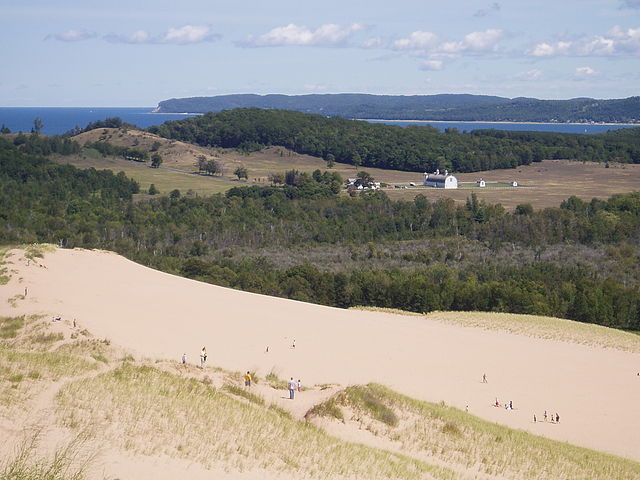
Glen Lake, Leelanau County, Michigan, USA

  • Target: 100% renewable energy for electricity, heating and transportation
  • Status: In progress
  • RES: Windpower, solar energy and geothermal.
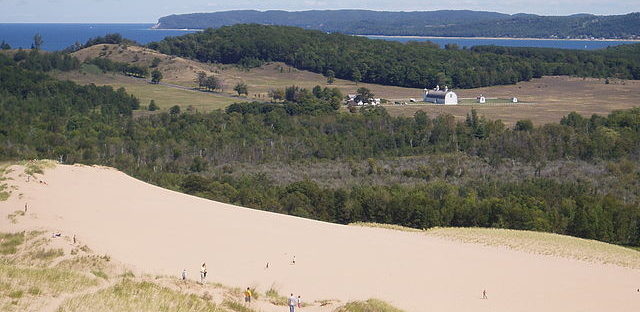
  • Implementation: Leelenau Township is located on the eastern shore of Lake Michigan, and  is well known for its cherry industry and for summer tourism. In Northport, a small village with an area of 1.65 square miles located near the tip of Leelanau Peninsula, a group of local leaders had decided that the economic and environmental benefits of renewable energy were worth the effort to transition the township to 100% renewable energy. To enable the township to achieve this target, local university students and activist leaders began working together in 2014 to develop a Renewable Energy Community Plan. This effort would involve the University of Michigan’s School of Natural Resources and Environment (SNRE) Master’s Project Team with the Northport Energy Action Taskforce (NEAT). NEAT is a local non-profit, all volunteer, community based organisation that advocates and pursues actionable renewable energy and energy efficiency projects. Its members include senior retired professionals, farmers, government committee members, and others with influence in the community.

    The Renewable Energy Community Plan focuses on educating the public and garnering community support to accelerate efforts in becoming a resilient, energy self-sufficient and energy efficient community. It lays out a design and method of implementation for a model which other small Michigan communities can successfully emulate. The basis of the Leelanau model is the initial energy target of meeting the Leelanau-Northport's 30 million kilowatt hour annual electricity demand with renewable energy sources. Next is to expand the Plan to include the heating and transportation sectors.

    Renewable power installations already implemented in the township include a community wind turbine that helps power a local wastewater treatment plant, the solar powered Northport Creek Golf course, and other solar energy systems planned for local agricultural operations, wineries and government facilities. Some residents have installed renewable energy and efficiency upgrades in their homes, as well as geothermal units for heating and cooling. Among the financing models being explored in the Plan are community owned projects like a community solar farm in which multiple community members may own a stake in the system.
  • Population: 2,017 (2017)
  • Area: 227.6 sq mi (589.4 km2)
  • Link: https://www.northportenergy.org
Glen Lake, Leelanau County, Michigan, USA

Linköping, Sweden

Linköping, Sweden

  • Target: 100% renewable energy sources for fuel, heating and electricity.
  • Status: In progress
  • RES: Biogas as biofuels, district heating and cooling systems.
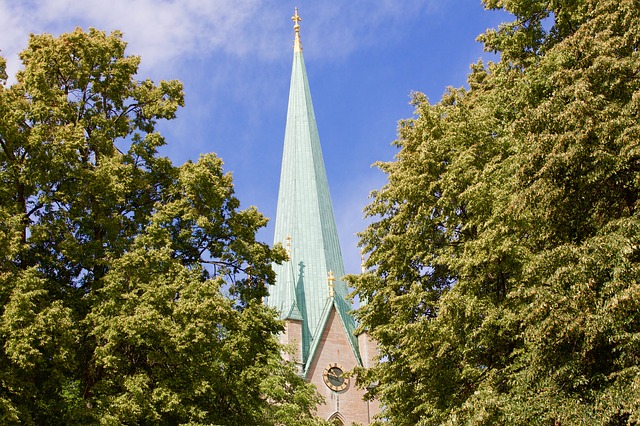
  • Implementation: In the 1970s, Linköping was suffering from air pollution because of emissions from diesel-fuelled public buses. An alternative fuel was found in methane-rich biogas since it was clean-burning and cheaper than expensive oil imports. In 1995, the city in cooperation with Tekniska Verken, the municipal services provider and the Linking University decided to form an associated company with shared ownership, called Linköping Biogas AB (now Svensk Biogas). It began work with the farmers’ association, transit authorities, and other actors to implement a biogas project. The biogas would be made by turning waste products (wastewater, residues from local agricultural activities, meat processing industries and restaurants) into methane. The production would reduce the need for environmentally destructive landfills and waste incinerators, and reduce the volume of waste sent for incineration. The biogas project has contributed to the city’s economy, by increasing the competitiveness and productiveness of local farmers through the production of biogas and bio-fertilisers. By 2002, the entire city bus fleet and about 90% of the taxi fleet were bio-methane driven. In 2005, the world’s first biogas train became operational in Linköping. Since 2010 the City of Linking created its own car pool of around 25 vehicles that run on biogas. The cars are used by municipality employees during the daytime for work-related travel and are available for the general public in the evenings and at weekends. Besides biogas, the city is investing in co-generation for producing electricity, and providing district heating and district cooling from waste incineration.
  • Population: 104,232 (city), 158,841 (metro)(2010)
  • Area: 42.16 km2 (16.28 sq mi)
Linköping, Sweden

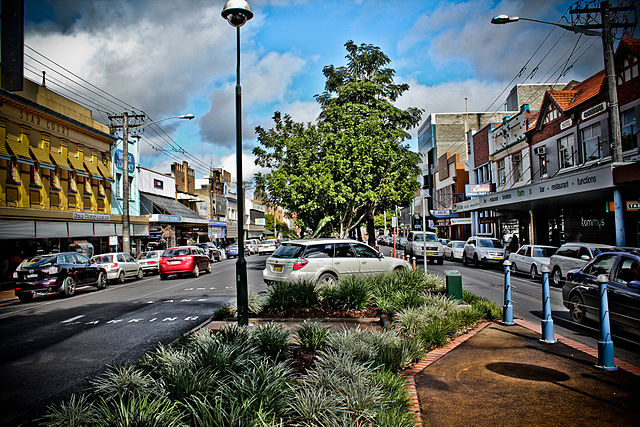
Lismore, NSW, Australia

Lismore, NSW, Australia

  • Target: Generate 100% of the City Council's electricity needs from renewable energy sources by 2023.
  • Status: In progress
  • RES: Solar photovoltaic and thermal systems, hybrid wind and solar-powered off-grid streetlight.
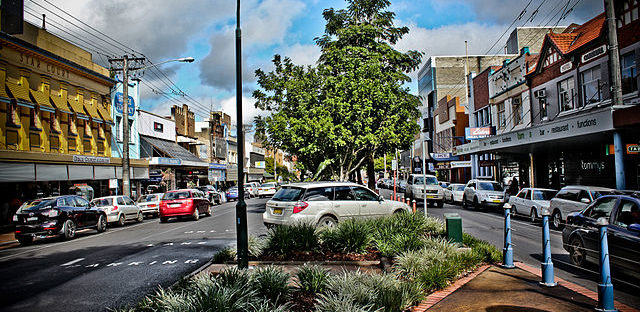
  • Implementation: The 100% RE target set by Lismore City Council is a corporate target rather than one applied to the entire city area. The decision of the City Council was made in 2013 after an 18-months community consultation, which resulted in the community expressing the wish for Lismore to become a model of sustainability, starting with the Council itself reaching the 100% goal. The City Council's response was  to develop the 2023 Renewable Energy Master Plan in 2014, which would include various action plans. The Plan would involve two important stages. First, energy consumption should be significantly reduced with a range of energy efficiency measures, such as switching to LED lighting and installing solar PV and solar hot water systems at Council-owned sites. Second, a large-scale 3.8-4.7 MW solar plant should be constructed. In 2014, Lismore awarded a tender to Nickel Energy to install 166kW of solar PV which should save nearly $100,000 a year in electricity costs. The city also took advantage a Community Energy Efficiency Program (CEEP) which was established by the federal government of Australia to support local councils and community organisations in improving the energy efficiency of buildings, facilities and street lighting as well as delivering community education. The city conducted energy efficiency upgrades in buildings and facilities. It soon became the first local government in Australia with hybrid wind and solar-powered off-grid street lighting. Meanwhile, the energy efficiency upgrades has reduced electricity consumption within five years by 22%. Since 2013 the council has also been working together with the 'Farming the Sun' initiative to create Australia’s first community-owned solar farm consisting of two 100kW solar PV systems using a community-funded loan. Finance for the projects is being sourced from local community investors.
  • Population: 27,569 (2016)
  • Area: 1,290 km2
  • Link: https://www.lismore.nsw.gov.au/cp_themes/default/page.asp?p=DOC-QMM-54-48-20
Lismore, NSW, Australia

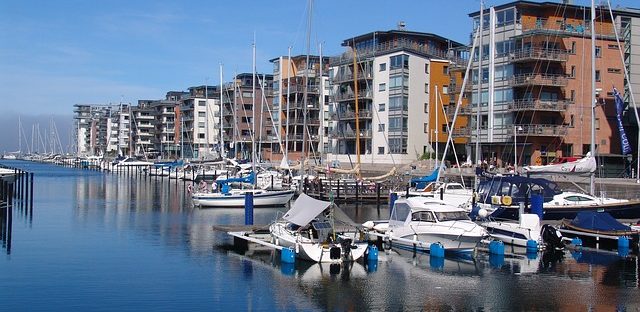
Malmö, Sweden

Malmö, Sweden

  • Target: 100 % RE by 2030 and climate neutral by 2020.
  • Status: In progress - In 2014, the city produced 30% of its energy needs from RE.
  • RES: Windpower, solar power, and district heating and cooling systems.
  • Implementation: In 2009, the city of Malmö launched the ‘Environmental Program’ in order to: (1) reach the goal of 100% RE, (2) improve the sustainability of the city, and (3) raise the quality of life of its citizens. Environmental goals were set: reduce energy consumption by at least 20% by 2020 and by a further 20% by 2030, and reduce GHG emissions by at least 40%. Furthermore, rail traffic, other electrically driven public transport and the network of cycle lanes will be improved and extended. The Program gives citizens the opportunity to participate in implementation, encourages private investment in RE, and reinforces co-operation with regional stakeholders. Today, he City runs all municipal buildings on 100% RE and has already been reducing greenhouse gas emissions with a focus on energy efficiency, reducing energy use, and investing in renewable energy. Over the past 20 years, the city’s disused brown fields and industrial spaces have been re-developed and revitalised with energy efficient buildings and attractive public spaces. The Western Harbour (Västra Hamnen) with housing estates operates on 100% locally produced RE. The houses are powered by a 2 MWh wind turbine that provides 99% of their electricity and 8 kWh of solar PV. Western Harbor also has an innovative district heating and cooling system. In the summer, cold water from the previous winter, which is being stored 90 meters underground in aquifers, is pumped up by wind-powered electricity and run through a heat pump for district cooling. Once the water is heated it is pumped back down into the aquifers where it is stored for heating buildings in the winter. Furthermore, Malmö is home to Sweden’s largest solar energy plant: Sege Park, featuring 1250 m² of photovoltaic panels.
  • Population: 312,012 (city), 728,293 (metro) (2017)
  • Area: 332.6 km2 (128.4 sq mi)(city), 2,522 km2 (974 sq mi)(metro)
  • Link: https://reneweconomy.com.au/malmo-sweden-leading-way-70597/
Malmö, Sweden

Marbletown, New York, USA

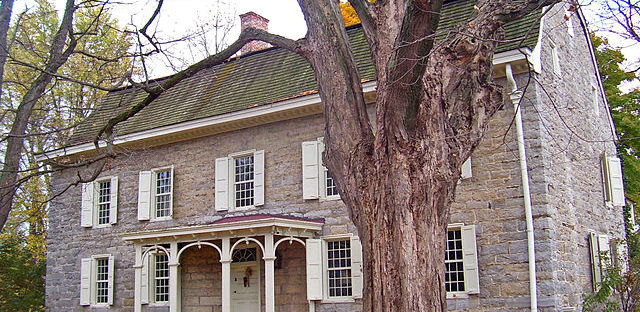
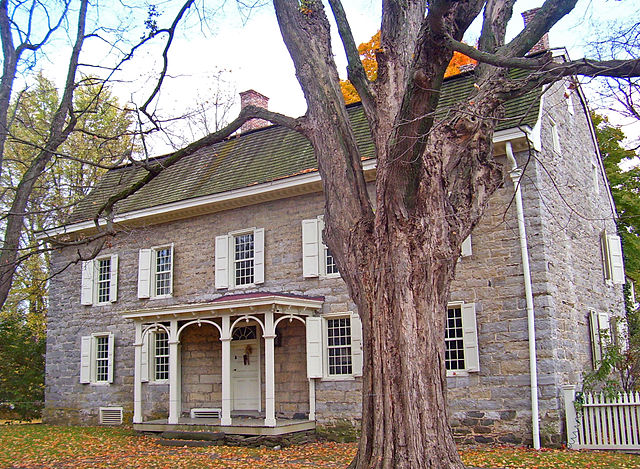
Wynkoop Stone House, Stone Ridge, Marbletown, New York, USA

  • Target: 100% renewable energy
  • Status: In progress
  • RES: Hydropower, solar energy, biomass energy and heat pumps.
  • Implementation: Marbletown is located in New York's Hudson River Valley, positioned on the edges of the Catskills and Shawangunk Mountains. To achieve its energy target, Marbletown joined the Renewable Highlands Community Choice Aggregation (CCA) program, which was enabled by New York's Reforming the Energy Vision initiative. The CCA replaced the town's former electric utility, Central Hudson, as the default electricity provider. The CCA would procure generation for the town, while Central Hudson would continue to provide electricity delivery, service and billing. Customers also have the opportunity to opt out of the program at any time. Through group purchasing of electricity, it is expect that 100% renewable electricity will be supplied at a reduced price compared to electricity supplied by Central Hudson. If it turns out that the CCA cannot obtain electricity on advantageous terms, the town can leave the CCA at no cost and no further obligation. Marbletown CCA began operating in early 2019.

    As a rural town, most residents are completely car-dependent for their everyday needs. Marbletown has installed EV charging stations at the town's community and municipal buildings to encourage the use of E-vehicles. To address lower solar production in winter, combined with higher winter electricity demand for heating, Marbletown is looking to reduce energy consumption through better building efficiencies. However, this challenge may better be addressed outside the town's borders. The state of New York is pursuing the deployment of 2,400 MW of offshore wind, and hydropower resources from Quebec, Canada.

    Other than solar, local renewable energy resources found in Marbletown are hydropower and biomass. The town has numerous small streams and an existing run-of-river hydro plant. Many town residents save money by heating with wood stoves, rather than fuel oil. The state has generous incentives for the installation of advanced wood heating systems. Marbletown has also participated in a Solarize campaign that has resulted in 16 residential solar installations in the town and 30 additional installations in the other two participating towns. The town is also planning to lease their rooftops for community solar developments, upgrade the local utility-owned hydropower plant, ban natural-gas connections and pipelines in the town, modify the cost of building permits to favor building efficiency and electrification, amongst others. (Via Greentech Media)
  • Population: 5,607 (2010)
  • Area: 55.18 sq mi (142.92 km2)
  • Link: https://nyenergyweek.com/new-york-town-plans-take-100-renewable-energy/
Wynkoop Stone House, Stone Ridge, Marbletown, New York, USA

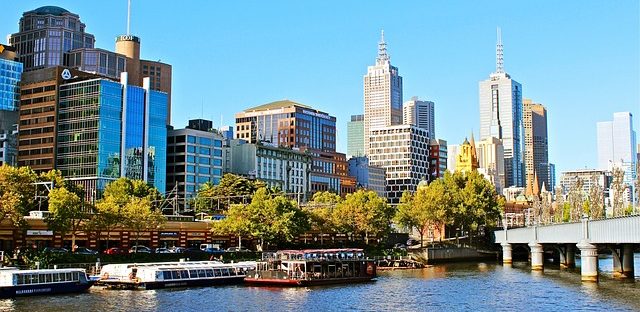
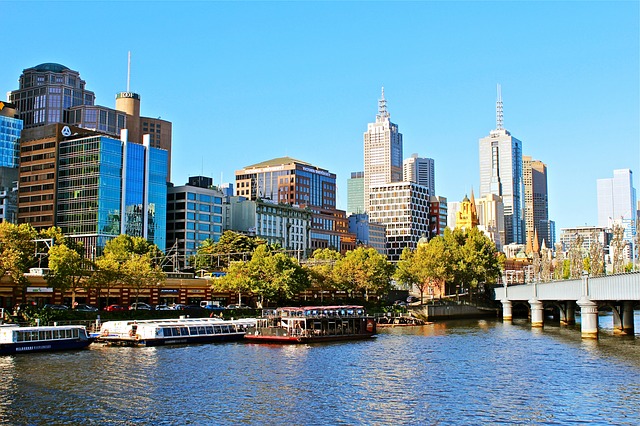
Melbourne, Victoria, Australia

Melbourne, Australia

  • Target: 100% renewable energy
  • Status: Achieved
  • RES: Wind power
  • Implementation: The City of Melbourne is the first major city council in Australia to be 100% powered by renewable energy, achieved through the implementation of a renewable energy power purchasing agreement. The energy is sourced from a 80 MW wind farm at Crowlands, a small agricultural community about 128 miles (206 kilometers) from Melbourne. Pacific Hydro has installed twenty-five turbines, with the goal of 39 turbines. The construction of the wind farm was supported by fourteen members of the city’s leading universities, companies, councils, and cultural institutions. The city aims to lead Australia  in responding to climate change, securing a sustainable energy supply for the future and show how a major city with a AUS$92 billion economy can influence positive outcomes in regional towns. The project has created over 140 regional jobs during the construction period. It has also created eight ongoing maintenance jobs. In Crowlands, Pacific Hydro is installing a rooftop solar photovoltaic system and storage battery at the town hall. It will become one of the few town halls in the country powered by solar energy.

    The city plans to expand the project by facilitating power purchase agreements for businesses across the city. This will continue to generate investment in new renewable energy which is the cheapest cost for new build electricity generation.
  • Population: 5,000,000 (2018)
  • Area: 9,992.5 km2 (3,858.1 sq mi)
  • Link: https://www.melbourne.vic.gov.au/about-melbourne/sustainability/pages/sustainable-energy.aspx
Melbourne, Australia

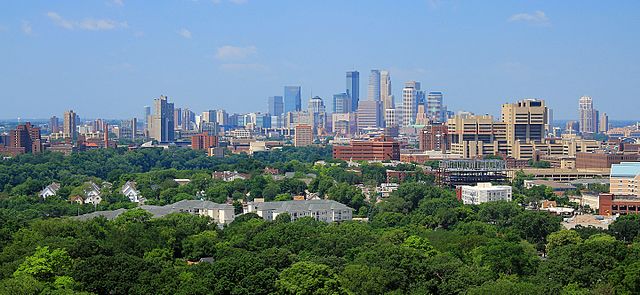
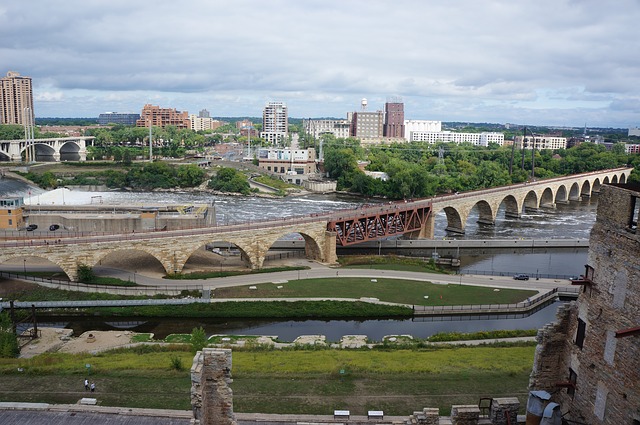
Minneapolis, Minnesota, USA

Minneapolis, Minnesota, USA

  • Target: 100% renewable electricity for city operations by 2022, community wide by 2030
  • Status: In progress
  • RES: Wind and solar power
  • Implementation: In April 2018, Minneapolis became the largest city in the United State's Midwest to commit to 100% clean and renewable electricity, focusing on a shift from fossil fuels to wind and solar power. The resolution was supported by the Sierra Club and national youth activist organization iMatter. It set out ambitious goals that complemented the city’s Climate Action Plan, which aimed to reduce carbon emissions in the coming decades. The city's high solar capacity provided a good basis for the state’s community solar program which generate around 44MW. Residential customers of the utility company Xcel's program achieved savings through the community solar subscription, and a third of the power produced went to public-sector entities such as schools. Xcel Energy, which has its headquarters in Minneapolis, operates several solar power plants in the state and across the country. Along with environmental sustainability, the city's clean energy policy included strategies that ensured that all consumers, communities of color, low-income communities, renters, equally benefit from the energy transition.
  • Population: 429,954 city, 3,690,261 metro (2020)
  • Area: 57.49 sq mi (148.89 km2)
  • Link: Blueprint for Powering Minneapolis Municipal Operations with 100% Renewable Electricity by 2022 (pdf)
  • © Kevin Sorensen

Moab, Utah, USA

Moab, Utah, USA

  • Target: 100% renewable electricity supply by 2032
  • Status: In progress
  • RES: Solar energy
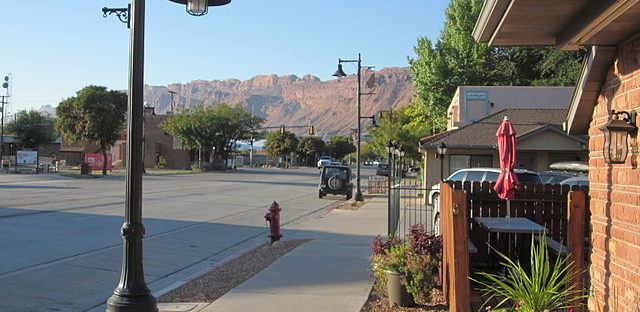
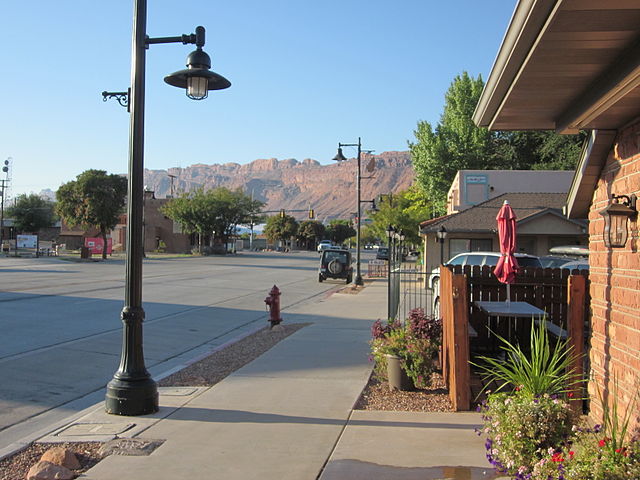
  • Implementation: Moab is a town surrounded by National Parks in the US western state of Utah. In February 2017, the City Council voted on a resolution to commit to reaching a 100% renewable electricity supply in the community by 2032. The decision was made based on community's concern for the environment and for the local economy. To demonstrate its leadership, the City voted on the resolution as it was completing an expanded 63 kW solar array on the City Hall building. The resolution also commits the city's municipal operations to be powered by 100% renewable sources in 2027, five years earlier than the entire community, with an interim goal of achieving 50% renewable power by 2024. The resolution also contains greenhouse gas reduction targets of 80% below 2018 levels by 2040, and 50% below 2018 levels by 2032. To help the city stay on track and communicate progress, the resolution calls for updating the greenhouse gas inventories every three years and publishing progress on the 100% renewable power goals every other year.
  • Population: 5,253 (2017)
  • Area: 4.1 sq mi (10.7 km2)
  • Link: https://moabcity.org/478/Sustainability
Moab, Utah, USA

Morbach, Germany

Energiepark, Morbach, Germany

  • Target: Energy self-sufficient by 2020
  • Status: In progress
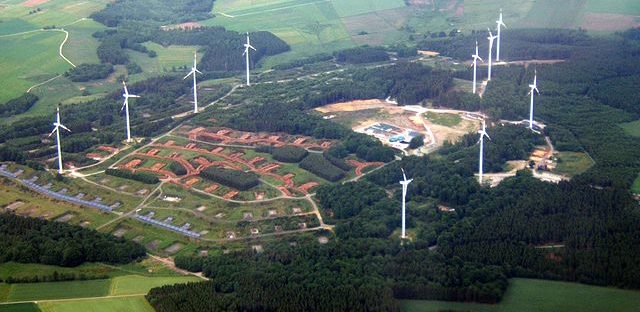
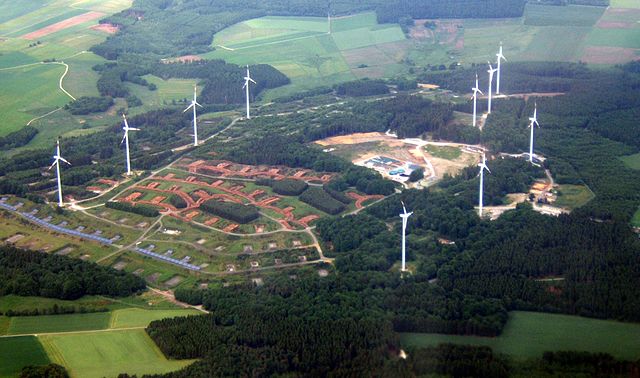
  • RES: Wind farms, solar power, biogas plants and micro district heating systems using wood-pellets.
  • Implementation: Morbach is a municipality in Rhineland-Palatinate, in western Germany. It has set itself the ambitious target of energy self-sufficiency based on renewable energy by 2020. To reach this goal, it has conducted research into the topic. Over 10 years the electricity and heat demand of all municipal buildings has been monitored to identify potentials for energy saving measures. Besides that, a Material and Energy Flow Analysis for the municipality has been carried out and an Action Plan for the coming years is in progress. Recently, 14 wind power plants (28 MW), 7 MWp photovoltaic, 2 biogas plants and micro district heating systems with wood-pellets provide the municipality with 20% renewables. To expand the use of renewables Morbach is making use of municipal funding for further energy efficiency and renewable energy projects. For that purpose new wind power plants, new photovoltaic installations and another micro district heating system are at the planning stage. It has created the Energy Landscape, a new tourist attraction which has been visited by more than 20,000 people from 70 countries around the world.
  • Population: 10,481 (2017)
  • Area: 122.20 km2(47.18 sq mi)
  • Link: (In German) https://www.energielandschaft.de/index.php
Energiepark, Morbach, Germany