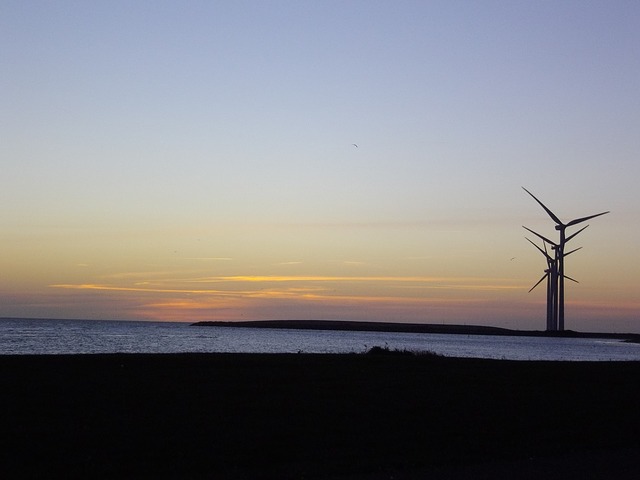
East Hampton, New York, USA

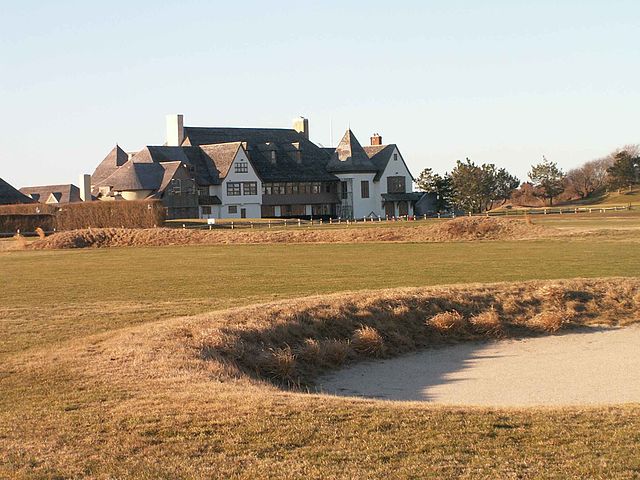
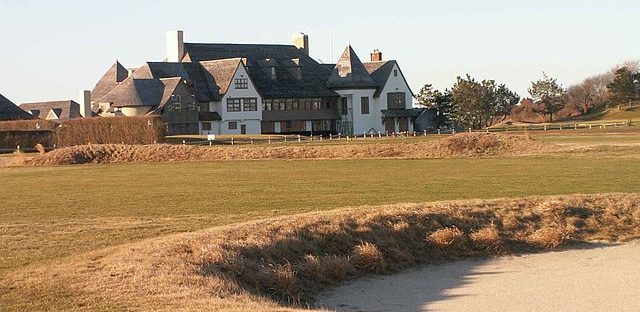
Maidstone Golf Club, East Hampton, New York, USA

  • Target: 100% renewable energy to meet electricity demand by 2020, and heating and transportation demand by 2030.
  • Status: In progress
  • RES: Solar energy and wind power.
  • Implementation: The town of East Hampton, New York is located in Suffolk County on the eastern end of Long Island's south shore. In May 2014, its Town Board voted unanimously to set the 100% goal, making it the first municipal government on the East Coast of the United States to set such a bold target. The goal was motivated by the need to address rising summer peak demand for electricity and to reduce the need for controversial, unattractive new transmission lines that were beginning to go up in the region. By improving energy efficiency and developing local renewable energy, money and jobs in the local economy would also be better ensured.

    The decision was in line with both state and local policy. According to the New York State Executive Order, climate change is to be mitigated by cutting greenhouse gas emissions from all sectors by 80 percent by 2050. In October 2013, the East Hampton Comprehensive Energy Vision was adopted which set specific energy efficiency and renewable energy targets and timelines.

    East Hampton is using available incentives for local renewable electricity development. The local utilities Long Island Power Authority (LIPA) and PSEG Long Island (PSEG-LI) offers a 100 MW solar Feed-in-Tariff with a 7 cents per kwh if a minimum of 40 MW of solar proposals were received for the area. Additionally, LIPA/PSEG-LI had issued a 280 MW Request for Proposals (RFP's) for renewable generation.  The Town issued RFP's for solar proposals on town-owned land and received about 70 MW worth of proposals under both the feed-in tariff and the RFP. By May 2014, LIPA/PSEG-LI had already selected 32MW of solar proposals to be located in East Hampton.

    Wind farms by off-shore wind energy development group Deepwater One are estimated to supply Long Island with over several hundred MW of power. And if all of the projects selected by the town and the proposed offshore wind farm get constructed, the combined energy production from these facilities is estimated to be greater than the East Hampton's annual electricity consumption of 310,000 MWh. Included in this calculation is only 21% of the offshore wind farm's output as it would be shared by five East End towns.

    In May 2018, the renewable energy initiative 'Energize East Hampton' was launched to help connect residents and local businesses to programs that help them reduce their energy consumption, and as a result, lower their energy bills. The program also includes a Solarize campaign, which is supported by the State’s NY-Sun initiative with the aim of increasing the number of grid connected rooftop solar PV systems in East Hampton. Residents and businesses can install rooftop solar PV systems at a discounted price offered via the campaign.
  • Population: 22,009 (2016)
  • Area: 386.55 sq mi (1,001.15 km2)
  • Link: http://energizeeh.org
Maidstone Golf Club, East Hampton, New York, USA

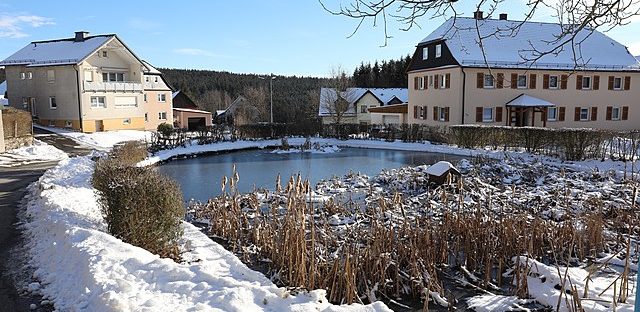
Effelter, Germany

Effelter, Germany

  • Target: 100% renewable energy
  • Status: Achieved
  • RES: Biogas plant, wood chip boiler, cogeneration units, district heating network and solar PV.
  • Implementation: Effelter is a small rural village located in the northern part of Bavaria, Germany. Today, the village is producing 200% of its electricity consumption and meeting all of its heating needs with biomass, a local renewable resource. All of the power plants are owned by local citizens. Effelter's renewable energy transition began in 2001 when the installation of one biogas plant began to quickly garner community interest. The plant was soon supplying all of Effelter's heat requirements. Including two 65 kW combined heat and power units, along with a 500 kW wood chip boiler that provides extra backup in winter, the heat generated was distributed to every house via a 2.4 km / 1.4 mile long hot water pipe network. Combined with the installation of 160kW of solar PV on roofs, the biogas fuelled cogeneration units, the village was able to produce more than twice the electricity it needs.

    Raw material and waste from the agricultural and forestry sectors in the area helps fuel the village's energy plants. The biogas plant sources agricultural waste, liquid manure and grass from local farmers. The wood chips for the boiler plant are sourced from local forestry waste. The by-product from the biogas plant is used as a fertilizer, while the ashes from the wood chip boiler also helps to nourish the local forest.
  • Population: 244 (2015)
  • Link: http://bioenergiedorf-effelter.de/?lang=en
Effelter, Germany

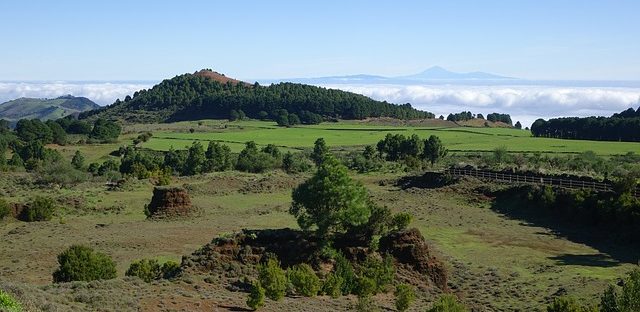
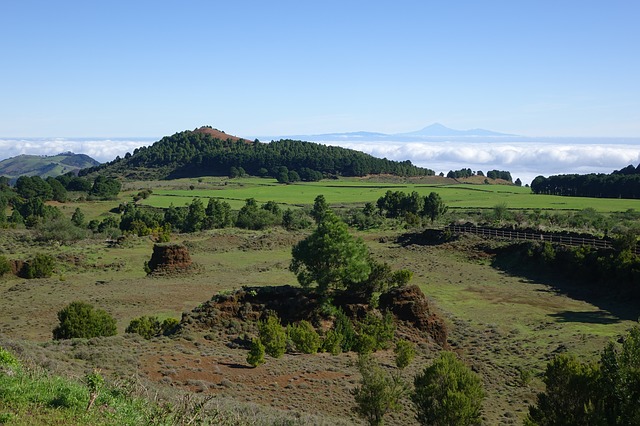
El Hierro, Canary Islands

El Hierro, Canary Islands, Spain

  • Target: To become a self-sustaining island in the face of the global climate crisis and persistently high fossil fuel prices.
  • Status: Achieved
  • RES: Five turbine wind farms and hydro plant supplies 80% of the island’s energy demands, 20% is generated through solar thermal collectors and grid connected photovoltaic systems. El Hierro’s climate and topography are key factors to the success of its renewable energy systems. The wind blows strongly and steadily. The island is small but mountainous. Excess electricity wind farm is used to pump water into an empty volcanic crater above sea level. When the wind is weak, the stored water is released through turbines to secure a steady supply of electricity. Biomass energy is being evaluated on the island, and electric vehicles are planned to replace fuel-based cars. Another trial is the installation of desalination plants to provide the island with fresh water.
  • Implementation: In the early 1980s, a development model was put in place that focused on respecting the natural environment and conserving natural resources. By 1997, the island council had adopted the El Hierro Sustainability Plan. Its framework initiated a technical feasibility study and finally the construction of the “El Hierro Hydro-Wind Plant”. At a cost of 65 million euros, the project was implemented by 3 entities: the island government of the Canaries (60% ownership), the Canaries Institute of Technology (10%), and a private Spanish energy and utility group (30%). The project was strongly support by its citizens as well as public (particularly the EU) and private institutions which contributed significant economic investment. The remote location of the island and recent submarine volcano eruptions have caused some difficulty with regards to security and logistics. However the council are continual working to address these challenges. It is estimated that the Hydro-Wind Plant project has helped avoid the annual consumption of 6,000 tonnes of diesel, equalling 40,000 barrels of oil that would have to be imported, thus creating a savings of over 1.8 million euros a year.
  • Population:10,798 (2018)
  • Area: 268.71 km2(103.75 sq mi)
  • Link: http://www.goronadelviento.es/index.php
El Hierro, Canary Islands, Spain

Extremadura, Spain

Extremadura, Spain

  • Target: 100% renewable energy
  • Status: Achieved
  • RES: Solar energy, wind power and hydropower.
  • Implementation: The region of Extremadura in southwestern Spain is one of the country's leaders in renewable energy installation. In 2010, its electricity demand was met by entirely renewable sources for the first time. In that year, the higher than usual winds and rainfalls, made its wind power and hydroelectric plants more productive than usual. It even enabled Spain to export electricity to France for the first time. Under normal weather conditions, Extremadura would only meet 78% of power demand with renewable technologies. However, renewable electricity installation has progress rapidly in the region in the last decade, which will see 100% renewable energy achievable for the long-term . For example, Extremadura today region gathers over 40% of Spanish concentrated solar power (CSP) projects. Wind energy has also been boosted and in 2011 the first 97 wind parks were approved in Extremadura, with more than 1.700MW. Biomass is an emerging sector, due to the large quantity of available resources of the region. Many plants are being promoted and an average of 150MW is expected to be implanted in the next 3 years.
  • Population: 1,087,778 (2016)
  • Area: 41,634 km2 (16,075 sq mi)
  • Link: http://www.eneragen.org/en/members/extremadura-energy-agency/
Extremadura, Spain

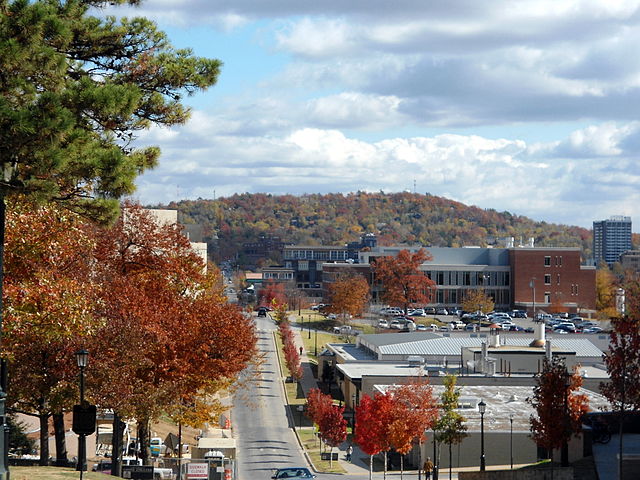
Fayetteville, Arkansas, USA

Mount Sequoyah, Fayetteville, Arkansas, USA

  • Target: 100% clean energy city government operations by 2030, city-wide by 2050
  • Status: In progress
  • RES: Solar energy
  • Implementation: As the first city in Arkansas to commit to 100% clean energy, Fayetteville is leading the state in committing to clean energy goals. The City Council adopted the 100% target by7-1 in January 2018. Its mayor, Lioneld Jordan, took the pledge for the city further by adopting a community-wide 100% clean energy commitment as part of the city’s Energy Action Plan, which outlines bold steps to transition the city to 100% renewable energy sources by 2050. The plan lays out goals and strategies for energy efficient transportation, buildings, waste management, carbon emissions reduction, and more. The mayor’s vision is supported by the University of Arkansas, home of the Razorbacks and the city’s largest employer. The city is also continually exploring clean energy solutions with its existing utility companies, Ozarks Electric and SWEPCO. It is simultaneously looking at solar investments and other energy- efficient upgrades for municipal buildings. It is also launching a bike-share program, strategizing to increase urban tree planting, and working out how to use funds from the Volkswagen settlement to invest in electric-vehicle charging stations for its downtown area.
  • Population: 86,751 city, 549,128 metro (2018)
  • Area: 55.41 sq mi (143.50 km2)
  • Link: http://www.fayetteville-ar.gov/3234/Climate-and-Energy
Mount Sequoyah, Fayetteville, Arkansas, USA
  • (Farmers utilising solar in southern Arkansas)

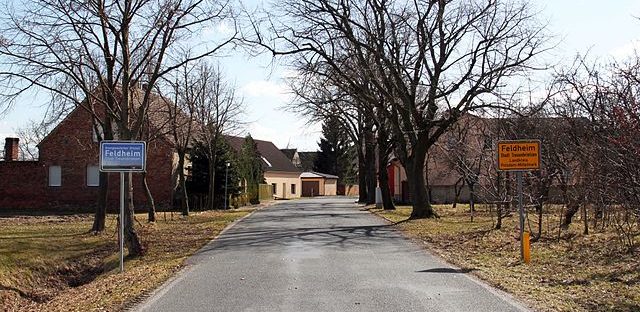
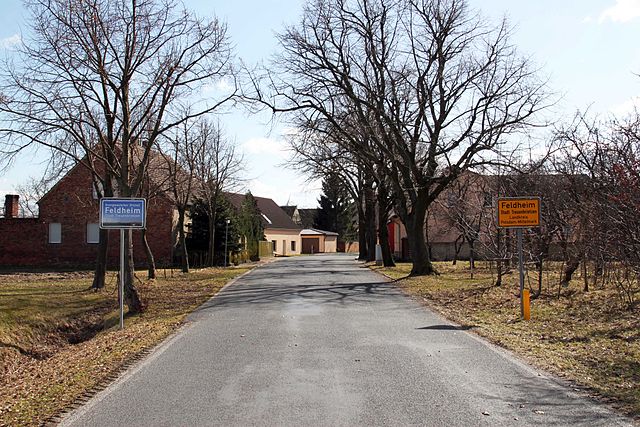
Feldheim, Germany

Feldheim, Treuenbrietzen, Germany

  • Target: 100% renewable energy self-sufficient, climate neutral village.
  • Status: Achieved
  • RES: Wind farm and biogas-fired thermal power station.
  • Implementation: In 1997, Feldheim local council began by installing four wind turbines together with local residents and start-up company “Energiequelle”. By 2015, the number had expanded to 47 wind turbines with a total capacity of 74MW. A battery system saved surplus energy, enough to supply electricity to the village for two days. In 2008, the community decided to build a biogas plant to further reduce energy costs by providing district heating. The biogas-fired thermal power station covers the total heating demand of the village and the surplus heat is used to generate electricity. In that same year, a solar park was added to the system, producing electricity for 600 households. The rapid growth in renewable energy development led to the establishment of the Feldheim Energie GmbH & Co. KG by local citizens. The company planned to directly supply district heating and electricity to the community instead of just feeding power into the national grid. However, the regional utility company E.ON refused to sell nor lease the grid to the villagers. In response, with financial support of the EU, Feldheim decided to build their own electricity and district heating grid, which ultimately made them entirely energy-sufficient (in heating and electricity) and a climate neutral village by 2010. Feldheim sells 99% of the energy produced by its wind park, CO2 emissions have been drastically reduced, energy prices have dropped by a third and citizens are no longer affected by rising gas or oil prices.
  • Population: 128 (2010)
  • Area: 15,7 km²
  • Link: https://nef-feldheim.info/the-energy-self-sufficient-village/?lang=en
Feldheim, Treuenbrietzen, Germany

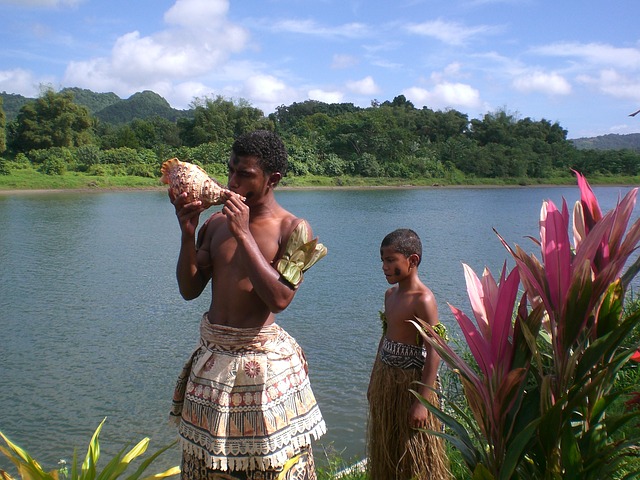
Fiji

Fiji

  • Target: Achieve 100% renewable energy share in electricity generation by 2030.
  • Status: In progress
  • RES: Hydropower, biomass, solar, windpower, coconut oil has been used as an alternative to diesel fuel in some rural area projects, and pilot projects using biogas are under development. Some evidence of geothermal resources.
  • Implementation: Fiji promotes renewable energy through its Rural Electrification Policy (1993), the National Energy Policy (2006) and the ratification of the IRENA Statute (2010). The National Energy Policy focuses on four key strategic areas: national energy planning, energy security, power sector, and renewable energy development. Its national government encourages the development of renewable energy through a number of policies, fiscal incentives, subsidies and loans. Fiji is seeking strong participation of the private sector, important since the emerging industries such as manufacturing, mining and construction are also very energy-intensive. The government has identified challenges to develop and commercialize RE technologies in Fiji: commercial viability, financial feasibility and appropriate service fees.
  • Population: 884,887 (2017)
  • Area: 18,274 km2 (7,056 sq mi)
  • Link: http://www.worldbank.org/en/news/feature/2016/05/24/fiji-growing-a-renewable-energy-industry-while-expanding-electricity-access
Fiji

FortZED, Fort Collins, Colorado, USA

The Oval, Fort Collins, Colorado, USA

  • Target: Net Zero Energy District
  • Status: In progress
  • RES: Solar PV, biogas, storage technologies such as fuel cells, and smart meters.
  • Implementation: Fort Collins, Colorado is a municipality located approximately 57 miles north of the state's capitol city of Denver. In 2007, the UniverCity Connections Sustainable Energy Task Force, an initiative of the Community Foundation of Northern Colorado, proposed the development of a "Net Zero Energy District". It would be a district within the municipality that would be a model for generating as much electricity as is consumed with renewable sources, combined with conservation, efficiency, and smart grid technologies. Named FortZED, the new district would cover an area of approximately 2 square miles and include the main campus of Colorado State University and downtown businesses and homes. Although completed in 2014, FortZED already showcased a demonstration project by 2011, a which showed that five businesses in the district could collectively reduce peak-load demand on a micro-grid by more than 20 percent during test periods over more than four weeks. The project combined a range of energy solutions, including efficiency, smart meters, demand response, solar PV, biogas, and storage technologies such as fuel cells. Natural gas was used as back up generation. The project also featured electric vehicle charging stations at city offices, and EV car batteries were considered for backup energy during peak-demand periods. This demonstration project was part of the U.S. Department of Energy's Renewable Distributed Systems Integration program.

    FortZED is led by a collaborative team of three entities: Fort Collins Utilities, UniverCity Connections, and the Colorado Clean Energy Cluster, a local economic development organization. Funding sources have included a U.S. Department of Energy grant for $6.3 million, plus nearly $5 million in matching funds and in kind services, along with a $778,000 New Energy Communities grant from Colorado’s Department of Local Affairs and the Colorado Governor’s Energy Office, and $2 million in local matching funds.

    Today, FortZED represents about 10 -15% of Fort Collins Utility’s electric distribution system and serves approximately 7,200 residential and commercial electric utility customers.
  • Population: 164,207 (2016)
  • Area: 57.05 sq mi (147.77 km2)
  • Link: https://www.fcgov.com/fortzed/
The Oval, Fort Collins, Colorado, USA

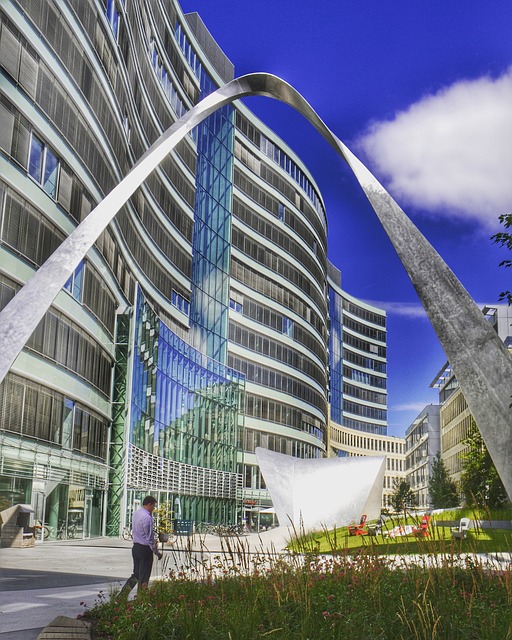
Frankfurt am Main, Germany

Frankfurt, Germany

  • Target: 100% renewable energy
  • Status: In progress
  • RES: Combined heat and power (CHP), solar thermal and PV, wind power, and the use of local organic wastes for both heating and power generation.
  • Implementation: The city of Frankfurt is a global financial hub and has positioned itself as a leader in sustainability and climate protection for several decades. In 1985, it founded one of the first municipal energy and climate protection agencies, which has worked extensively on promoting energy efficiency in local buildings and the adoption of combined heat and power systems. In 2008, the Frankfurt City Council agreed to implement a list of fifty energy saving and climate protection measures. The current Master Plan includes a dynamic array of projects and initiatives designed both to reduce emissions and to increase the adoption of renewable energy and energy efficiency technologies. Between 1990 and 2012, the City managed to reduce its emissions by 15% while the economy grew by over 50%.
    Frankfurt implements projects by combining a top-down and bottom-up strategy, involving local citizens and businesses. The city benefits from a highly educated workforce, and a citizenry that broadly supports climate action and the continued expansion of energy efficiency and renewable energy. In addition, both the federal and state-level governments have provided funds to help support Frankfurt’s 100% strategy. The city aims to increase awareness within local schools through a wide range of onsite projects in schools across the city. The City’s Energy Agency is in the process of elaborating on its Master Plan, a strategy whose implementation will involve architects, engineers, consultants, local businesses, public buildings such as schools and hospitals, as well as local residents.
    Due to the fact that Frankfurt is a relatively dense urban area, city representatives and local experts determined Frankfurt would need to rely on neighbouring communities and the surrounding rural area in order to reach the target of supplying 100 % the cities total energy needs from renewable energy sources. The current Master Plan envisions that approximately 25% will be supplied from energy generated within the City, 25% from outside the City, and total energy consumption will be decreased by 50%. Key elements of the strategy include increasing energy efficiency by 50 %, expanding combined heat and power (CHP) and increasing the role of solar (both thermal and PV), wind, and the use of local organic wastes for both heating and power generation. In addition, there are a number of pilots underway, including the initiative to develop a Virtual Power Plant (VPP), which would be designed to integrate several small generators into an interconnected network capable of adjusting to fluctuations in RE output.
  • Population: 746,878 (2017) city, 5,604,523 (2017) metro
  • Area: 248.31 km2 (95.87 sq mi)
  • Link: Renewing Frankfurt’s energy
Frankfurt, Germany

Frederikshavn, Denmark

Frederikshavn, Denmark

  • Target: 100% renewable energy by 2030
  • Status: In progress
  • RES: Wind farm, thermal solar collectors, heated water storage, heat pump systems, geothermal energy, and district heating.
  • Implementation: Frederikshavn is a town located in Northern Denmark. In November 2006, a group of Danish energy experts came together for a project called "Energy Camp 06" and  identified Frederikshavn as the ideal location for a model "Energy City," which would shift to 100% renewable sources for electricity, transportation, and heating by 2015. Frederikshavn was chosen because it was a good size for the testing of energy technologies, there were already existing electricity and heating production plants as well as a wind farm research facility, and there was political will to carry out ambitious plans.
    In February 2007, the Frederikshavn City Council approved the Energy City plan, which would be completed over 3 phases. First, it would reach a 40% renewable energy target by 2009. Second, its renewable energy share would annually increase to reach 100% by 2015, with the capacity to exchange energy with surrounding areas. Third, the 100% renewable energy system would be further developed to enable Denmark as a whole to transform to 100% renewable energy by 2030.
    The first phase involved implementing 4 projects, offshore wind  project with a total capacity of 25 MW, 8000 mof thermal solar collectors that annually generate about 4 GWh with 1500 cubic meters of water heat storage and an absorption heat pump at the existing CHP plant, a facility that upgrades biogas from a local plant to natural gas quality that fuels cars and is used in the existing cogeneration plants, and finally a heat pump system at the town's waste water treatment plant that extracts 4 GWh of heat from the waste water and produce 6 GWh of heat for the district heating supply. To reach a 100% renewable energy supply by 2015, a waste incineration CHP plant was built. This project prioritises recycling before incineration, the remaining relatively small amount of waste is used to create heat and power via CHP technology. The heating grid was also expanded. Biomass boilers met industry heat demand, while homes not on the district heating grid are  retrofitted to use a combination of solar thermal and electric heat pumps. Then was the shift to electric, plug-in hybrid, and biogas in transportation. A  biogas plant was then built  for electricity, heat, and transportation fuel, using34 million tons of manure per year to produce biogas for the production of methanol, which can be used for district heating. Geothermal energy combined with heat pumps is added to the district heating supply. The rest of the city's energy demand is met by a 15 MW biogas CHP plant and  a 40 MW wind farm.
  • Population: 23,423 (2018)
  • Area: 651.04 km2 (251.37 sq mi)
  • Link: https://stateofgreen.com/en/partners/energy-city-frederikshavn/solutions/master-plan-for-renewable-energy-2030/
Frederikshavn, Denmark