Tshwane, South Africa

Pretoria, Tshwane, South Africa

  • Target: 50% renewable energy at community-scale by 2030, geared towards a 100% renewable energy pathway
  • Status: In progress
  • RES: Biogas from waste and solar power
  • Implementation: The City of Tshwane in South Africa has a target to reach 50% renewable energy at community-scale by 2030, with a political interest to reach 100% renewable energy. The city is preparing the transition in the transport and building sectors. City initiatives include biogas recovery from waste to fuel the city-operated bus fleet and the installation of two solar powered electric vehicle charging stations. Tshwane is retrofitting municipal buildings with renewable energy installations and encouraging the installation of solar water heaters for private homes. The City aims to invest in renewable energy projects and technologies, and adopt a robust sustainable energy procurement approach. Public procurement is an essential tool to support climate neutrality ambitions.
  • Population: 2,921,488 (2011)
  • Area: 6,298 km2 (2,432 sq mi)
  • Link: The Greening of Tschwane's Economy (PDF)
Pretoria, Tshwane, South Africa

Uralla, NSW, Australia

Uralla, Australia

  • Target: Become a decentralized, off-grid town, meeting 100% of the town's energy demand via local renewable energy generation.
  • Status: In progress - 10% of electricity from solar photovoltaics.
  • RES: Solar photovoltaics
  • Implementation: Reduce the town's energy needs  via energy efficiency upgrades to buildings and infrastructure. Change user behaviours in order to minimise personal and household energy usage. Increase the amount of local renewable energy produced in Uralla to provide for all of the community’s energy demand. The company ZNET assisting the town with the planning has worked on projects in Germany and North America. The ZNET plan focuses on renewable energy generation and integrating renewable energy technologies. It will take around 5-10 years to complete.
  • Population: 6,034
  • Area: 193.5 km²
  • Link: https://zneturalla.org.au


Uralla, Australia

Valley View University, Accra, Ghana

Valley View University, Accra, Ghana

  • Target: 100% renewable energy
  • Status: In progress
  • RES: Solar energy and biogas
  • Implementation: Valley View University is located in Accra, the capital of Ghana. In 2001, it became the first ecological university in Africa. An ecological master plan was the basis for the sustainable campus. Developed 10 years prior, the master plan outlines an architectural and urban planning framework that works to conserve land use and energy, as well as to create closed nutrient and water cycles that support the local economy. It focuses on sustainable and resource-saving buildings; water and nutrient cycle management; ecologically sound treatment of landscape; large and connected green areas on campus with high biological activity; improvement of microclimate by means of bioactive zones; and activation of bioactive zones using local plants, retention swales and ditches, and human fertiliser.

    Today, the technological concept serves as a regional and international pilot model. The university features a range of energy technologies. Electricity is generated from rooftop solar panels, and kitchen and sewage waste is converted to energy at the on-campus biogas plant. As part of its sustainable campus development, the university offers a degree program in ecological studies. According to the International Climate Protection Initiative, the estimated investment into the project was 1.3 million euros.

  • Population: approx. 10,000 students
  • Area: 3120-hectare (296.5 acre) university campus
  • Link: Africa's First Eco-University
Valley View University, Accra, Ghana

Vancouver, British Columbia, Canada

Vancouver, British Columbia, Canada

  • Target: 100% renewable energy by 2050
  • Status: In progress
  • RES: Renewable energy mix, and energy efficiency measures.
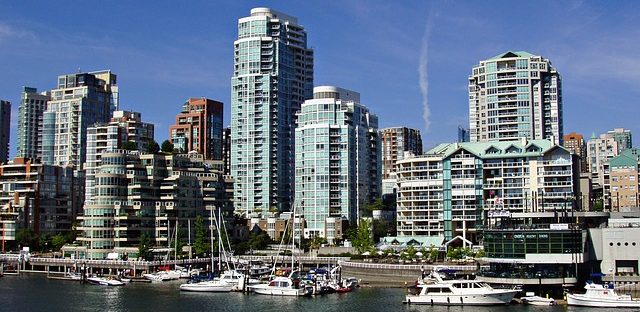
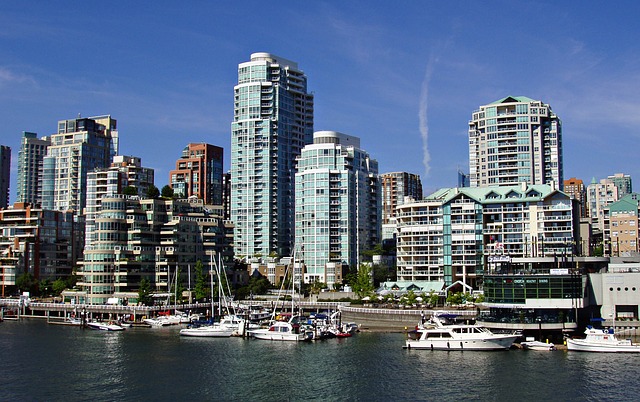
  • Implementation: Vancouver is the most densely populated city in Canada, and the largest city in the Province of British Columbia. It is also part of the third largest Canadian metropolitan area, Metro Vancouver. The city is often recognized as one of world’s most livable city thanks to its compact urban fabric and mixed-use development. It is an active economic centre due to its location on the Pacific Rim.  Vancouver sea-port, Port Metro Vancouver is the third largest port in tonnage in North America. In December 2015, the city decided to commit to a 100% renewable energy target by 2050. To achieve this, it laid out the "Renewable City Strategy 2015-2050", which would not only be in line with Vancouver’s compliance with the UN Covenant of Mayors in October 2015, but also the Greenest City 2020 action plan. Based on thorough research and analysis of current energy consumption data, international best practices and civil society consultation and expertise, the city's Strategy draws clear guidelines on buildings and transport, which account for 90% of the city energy consumption. To reach the 100% RE goal, the city will involve private and public stakeholders such as businesses, citizens and all levels of government (local, regional, provincial, and federal). By expanding distributed energy systems and improving existing city infrastructure, Vancouver also aims to reduce its greenhouse gas emissions by at least 80% below 2007 levels before 2050, and decrease its energy use from 53.3 million GJ in 2014 to 38.3 million GJ by 2050.
  • Population: 631,486 (city), 2,463,431 (metro)(2016)
  • Area: 114.97 km2 (44.39 sq mi)(city), 2,878.52 km2(1,111.40 sq mi)(metro)
  • Link: City of Vancouver: Renewable City Strategy 2015-2050
Vancouver, British Columbia, Canada

Varese Ligure, Italy

Piazza Vittorio Emanuele, Varese Ligure, Italy

  • Target: 100% of renewable electricity.
  • Status: Achieved - 100% of renewable electricity supply in 2001.
  • RES: 4 wind turbines, and solar thermal systems.
  • Implementation: In the 1980s, Varese Ligure and its surroundings suffered from unemployment and de-population. The number of inhabitants had significantly dropped from 6,000 inhabitants to 2,155 (2010). In response, Maurizio Caranza, the mayor at the time, established a plan to transform the town into a destination for green and sustainable tourism through increasing the share of renewable energy and organic food products to 100%. Today, there are four wind turbines surrounding Varese Ligure producing about 8 GWh annually, which is more than three times of the town’s total electricity demand. The surplus electricity is fed into the national grid generating around 25,000 euros per year. Varese Ligure also uses solar power to heat the local swimming pool and to cover the energy demand of the town hall building to 98% and the secondary school building by 62%. Additional 8 kW is generated through hydropower and the municipality is exploring the use of wood pellets for heating. Since the shift to renewable energy supply, the number of inhabitants have stabilised at around 2400. Unemployment decreased with the creation of 140 new jobs in the renewable energy sector. The municipality is benefiting from 350,000 euros tax revenues each year from the private operator of the renewable energy network, while the number of tourists have substantially increased. Besides renewable energy, Varese Ligure is supplying 98% of its food demand with organic products from 108 organic farms, applying environmental friendly technology for water purification and achieving significant reductions in waste and pollution.
  • Population: 2,059 (2015)
  • Area: 136.3 km2 (52.6 sq mi)
  • Link: https://www.greenbiz.com/blog/2014/01/06/how-small-town-italy-became-model-sustainability
Piazza Vittorio Emanuele, Varese Ligure, Italy
  • Piazza Vittorio Emanuele, Varese Ligure © Cyril Doussin CC BY-SA 2.0

Växjö, Sweden

Växjö, Sweden

  • Target: Fossil fuel free city - heating, electricity, cooling and fuels to stem from 100% renewable sources by 2030.
  • Status: In progress - Share of renewable energy at 60% in 2014.
  • RES: Biomass district heating system, and geothermal energy.
  • Implementation: The Swedish city of Växjö is located in the mid-southern county of Kronoberg in Sweden. The goal to become a fossil fuel free city was adopted in 1996. It began with a massive expansion of district heating systems and the use of forest biomass to feed these systems. This decreased its dependence on fossil fuels. The city also increased the use of geothermal energy. It launched its environmental program with the 100% target and outlined strategies, which included working with companies to support the shift to RES, working on energy efficiency,  and increasing the production of biogas, with requirements in public tenders for higher share of bio fuels in projects. Introducing renewables in the transport sector continues to be the greatest challenge.
  • Population: 66,275 (2017)
  • Area: 30.28 km2 (11.69 sq mi)
  • Link: https://www.theguardian.com/public-leaders-network/2015/jul/06/european-cities-clean-energy-governments-eu-climate-targets
Växjö, Sweden

Victoria, British Columbia, Canada

Victoria, British Columbia, Canada

  • Target: 100% renewable energy by 2050
  • Status: In progress
  • RES: Mix of RE technologies, electrical cars, district energy system, and Passive House standard in all new construction.
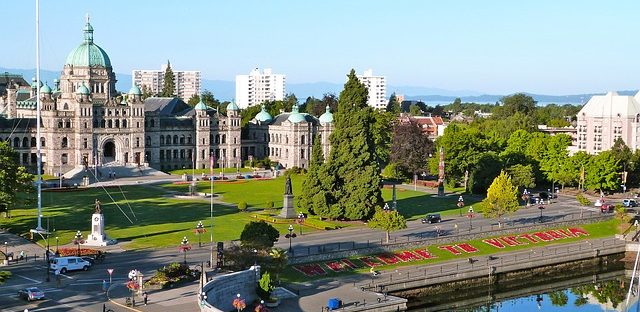
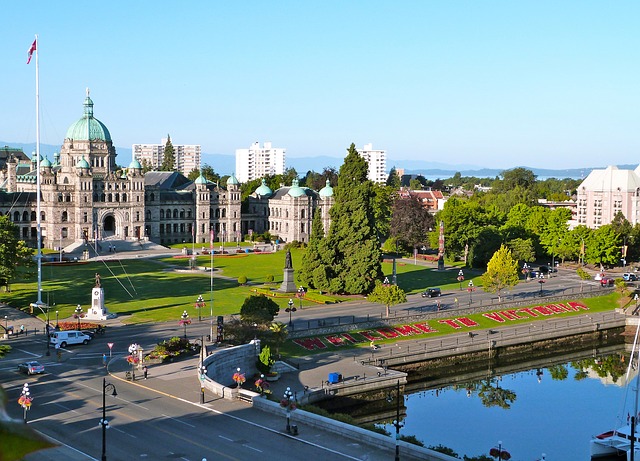
  • Implementation: The city of Victoria is British Columbia’s capital city and is situated at the southern point of Vancouver Island, directly north of the American border. In December 2016, the Victoria City Council released detailed plans for the city to become 100% RE by the year 2050, following a vote by the city council in August 2016. Victoria is the third city in Canada to announce plans for a 100% renewable energy future, where all energy needs will be provided by renewable means, including heating, cooling and transport. The measure was accompanied by a motion to reduce Victoria’s GHG footprint by 80%. The Victoria City Council has developed a detailed plan, including benchmarking and deadlines for the reduction of GHGs and increases of the city’s renewable energy mix until 2050. Areas of emphasis include increasing the proportion of electrical cars in the city’s fleet, continued development of the city’s district energy system, and adoption of Passive House standards to all new construction.
  • Population: 85,792 (2016)
  • Area: Capital city: 19.47 km2 (7.52 sq mi), Metro: 696.15 km2(268.79 sq mi)
  • Link: City of Victoria: Climate Leadership Plan
Victoria, British Columbia, Canada

Wangen im Allgäu, Germany

Wangen im Allgäu, Germany

  • Target: 100% energy supply for electricity (by 2020) and heating (by 2030)
  • Status: In progress
  • RES: Solar PV and thermal, biogas, biomass cogeneration, and hydropower.
  • Implementation: Wangen im Allgäu is a historic city in southern Germany. The town currently derives half of its electricity demand from renewable energy sources mostly solar PV (21,121 MWh/year) followed by biogas (15,128 MWh/year) and hydro (9,080 MWh/year).  Currently, approximately 8% of the town heating needs are provided by biomass, heat pumps and solar thermal collectors. Expansion of the wood chips biomass facility is planned as well as the development of a new CHP plant and new hydro power facilities. The latter would provide much higher RE supplies in the near future. It is envisaged that the town's goal to reach a 100 percent energy supply in both electricity and heating will be realized by upgrading the existing wood-fired power plant and by upgrading the production of electricity power from water power plants operated by the public utility company.
  • Population: 27,109 (2017)
  • Area: 101.28 km2(39.10 sq mi)
  • Link: Energieleitbild und Klimaschutzziele der Stadt Wangen im Allgäu
Wangen im Allgäu, Germany

Wildpoldsried, Germany

Wildpoldsried, Germany

  • Target: 100% renewable energy
  • Status: Achieved
  • RES: Wind, solar, small-scale hydro, biomass, biogas, cogeneration and district heating.
  • Implementation: Wildpoldsried is a small village in the district of Oberallgäu in Bavaria in southern Germany. The village has been recognized for its exceptional achievements in renewable energy production and in reducing its carbon footprint. It all began in 1997, when the community of Wildpoldsried began to construct a series of projects that produce renewable energy. The first efforts were wind turbines and biomass digesters for cogeneration of heat and power. In the time since, new work has included a number of energy conservation projects, more wind and biomass use, small hydro plants, photovoltaic panels on private houses, and district heating. Tied to this are ecological flood control and wastewater systems. Today, the impact of measures has resulted in the construction of nine new community buildings, including a school,  and community hall, complete with solar panels. There are three companies operating four biogas digesters. There are nine windmills. One hundred and ninety private households are equipped with solar, which pays them dividends. The district heating network has 42 connections. There are two small hydro power plants. Wildpoldsried now produces 469%  more energy than it needs and is generating 4.0 million Euro in annual revenue. At the same time, there has been a 65% reduction in the town’s carbon footprint.
  • Population: 2,567 (2017)
  • Area: 21.35 km2 (8.24 sq mi)
  • Link: (In German) https://www.wildpoldsried.de/index.shtml?Energie
Wildpoldsried, Germany

Wolfhagen, Germany

Wolfhagen, Germany

  • Target: 100% RE electricity supply by 2015.
  • Status: Achieved
  • RES: Windpark, a biomass and biogas plant, a small household RE systems.
  • Implementation: Wolfhagen is a small, idyllic German town, located in the Kassel District of the Federal State of Hesse. Its 100% RE achievement was a response to an increasing number of energy mandates and expenditures faced years earlier. By adopting an RE strategy, it was able to eliminate its dependence on fossil fuels and external energy suppliers, and keep revenues within the region which benefit its citizens directly. RE has also helped create many new jobs in the town. An important milestone for the city's energy transition was reached in 2003 when the council decided to buy back the electricity grid. The decision led to the “remunicipalization” of the grid by the municipally owned utility, Stadtwerke Wolfhagen. In 2008, Stadtwerke organized an excursion to a wind farm for representatives of all local political parties and less than four weeks later the sitting council officially adopted the 100% RE target. A broad participatory process was launched by the municipal administration with several stakeholders from the local forestry industry and businesses, as well as with conservationists. In 2012, in keeping with the political commitment to ensure citizens directly benefit from RE investments, the citizen-based energy cooperative BürgerEnergieGenossenschaft Wolfhagen was founded. By that time, the German Renewable Energy Act, the national legal framework, enabled rapid realisation of RE projects. Wolfhagen's RE strategy is centered on Windpark Rödeser Berg and Solarpark Gasterfeld, a biomass and biogas plant owned by local farmers, and many private household production systems. The local citizen energy cooperative holds a 25% share in the municipally owned utility Stadtwerke Wolfhagen. This partnership between cooperative and municipal utility fosters democratization of energy production and fair distribution of benefits. Harmonizing supply with demand remains a key focus in Wolfhagen's RE strategy. The town aims to establish a smart network that links households to the municipal utility which would optimize household devices, for example, at times when a lot of wind and sun energy is transmitted to the grid. It allows Stadtwerke Wolfhagen to send signals to households to start up and take advantage of lower-priced wind and sun-generated electricity. A pilot project of 35 households is underway with the intention of developing an evidence-based business model.
  • Population: 13,121 (2017)
  • Area: 111.95 km2(43.22 sq mi)
  • Link: How a small town reclaimed its grid and sparked a community revolution
Wolfhagen, Germany
  • © Günther Pöpperl