San Francisco, California, USA

San Francisco, California, USA

  • Target: 100% renewable electricity supply community wide by 2030.
  • Status: In progress
  • RES: Solar power and biogas cogeneration.
  • Implementation: San Francisco is a renowned city and county on the central coast of California. In December 2010, a $250,000 grant was awarded to the city from the Sidney Frank Foundation to develop an implementation plan over 12 months to generate 100% of San Francisco’s electricity from renewable sources by 2020 in support of the City’s carbon neutrality goal. By January 2011, the Mayor’s Renewable Energy Task Force was established  to develop recommendations to help meet this goal within 10 years. It was headed by the San Francisco Environment Department and comprised of local renewable energy leaders, key stakeholders and other City departments. In 2011, the electricity mix in the city was made up of 16% non-large hydropower renewables, 30% large hydro, 36% fossil fuels, and 18% nuclear.
    The Task Force report suggested six strategies to get to 100% renewable power by 2020. First was to increase energy efficiency by promoting energy audits and retrofits through local and state programs; integrating green building and energy labelling; tightening building code energy requirements; and. strengthening retrofit on resale rules. Second was to encourage local renewable energy by streamlining solar permitting and provide online permitting; funding  GoSolarSF (the local rooftop solar) incentive program; supporting net metering; developing  feed-in tariff for local renewables; integrate renewables on aging downtown distribution grid; and addressing solar system shading. Fourth was to encourage green leases and support community renewable energy legislation on the state level. Fifth was to encourage private sector investment in renewable energy through various measures. And sixth was to expand access to local renewable energy.
    Fundamental among these recommendations was the Community Choice Aggregation program (CCA) that allows communities to aggregate the bulk buying power of its citizens to purchase power on the wholesale market and directly from power generators. CCAs give communities the ability to opt out and stay with the local investor owned utility as a provider if they want to. In California, communities have been adopting CCAs to increase their renewable power portfolios and keep more value in the community. San Francisco's CCA program developed CleanPowerSF which today offers a basic plan of 35% renewable power for .25% less than the investor owned utility rates, or a "Super Green" plan for 100% renewable power. As of mid-2013, more than 18.5 MW of in-City renewables had been installed, with 15 MW of solar PV (more than 2,000 systems) citywide and 3.5 MW of biogas cogeneration at the City’s wastewater treatment plants. All public transportation in San Francisco was running on electricity or biodiesel.
  • Population: 884,363 (2017)
  • Area: 231.89 sq mi (600.59 km2)
  • Link: San Francisco Climate Action Plan
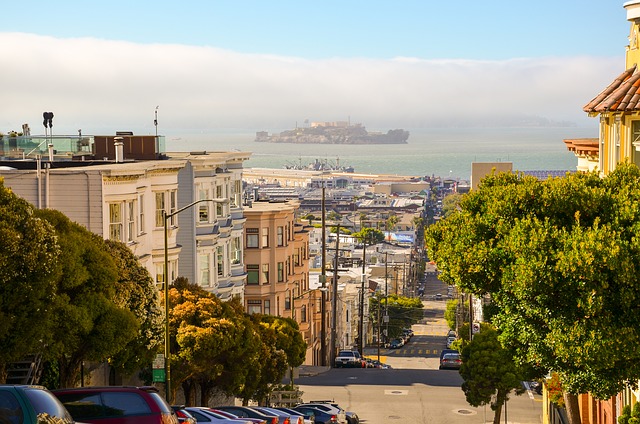
San Francisco, California, USA

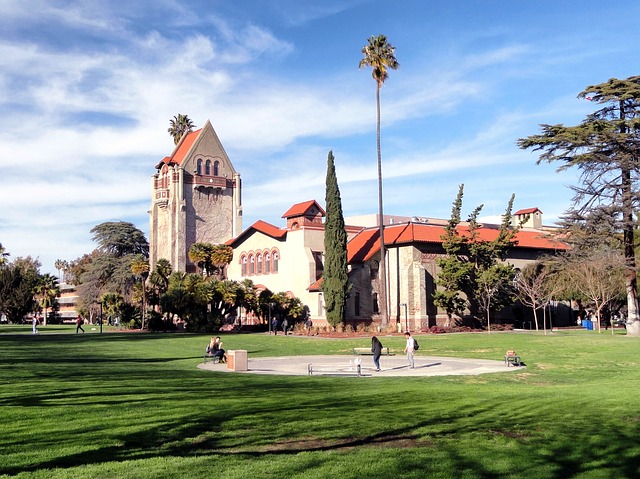
San Jose, California, USA

San Jose, California, USA

  • Target: 100% renewable electricity by 2022
  • Status: In progress
  • RES: Solar energy
  • Implementation: San Jose is California’s third largest city by population. In October 2007 the city launched its Green Vision, with plans to shift towards clean renewable energy. This 15-year-plan focuses on the creation of jobs, the improvement of the city life, and the preservation of the environment. It set the target that all sectors of the city are to be powered exclusively with renewable energy by 2022, and that per capita energy consumption should also be reduced by 50%. The city aims to achieve this by envisioning itself as a solar-powered community. Due to its location, the city possesses enough sunshine for solar and is already home to several solar technology companies. To finance this plan, the city is looking at ways to support the financing of solar projects by the creation of incentives and through the provision of regulatory strategies, such as abolishing building permits required for rooftop solar panels in residential areas. To carry out activities, the city adopts a participatory approach that engages the City Departments, and external stakeholders, such as the California Solar Energy Association. The city has plans to install solar panels on city buildings and to support and incentivise homeowners and businesses to do the same. In addition, it is supporting investments in solar power technology innovation. Aside from solar power, the city is evaluating the potential of other renewable energy sources, such as wind, water, hydro power and biomass.
  • Population: 1,035,317 (2017)
  • Area: 180.52 sq mi (467.55 km2)city, 2,694.61 sq mi (6,979 km2)metro
  • Link: CLIMATE SMART SAN JOSE
San Jose, California, USA

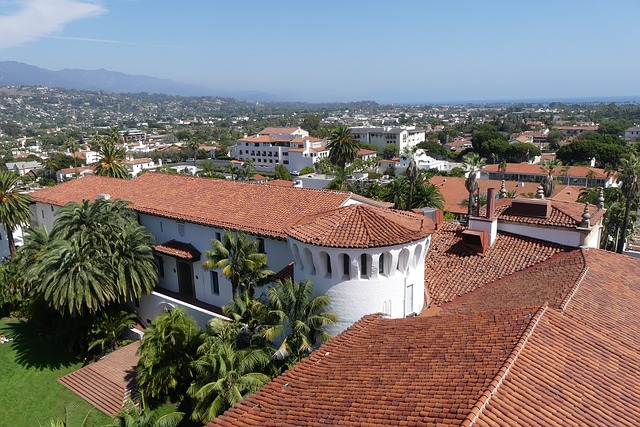
Santa Barbara, California, USA

Santa Barbara, California, USA

  • Target: Free of fossil fuels by 2033.
  • Status: In progress -  To date, about 30% of the City's electricity comes from renewable sources.
  • RES: Wind and solar power.
  • Implementation: The City of Santa Barbara has committed to a plan to make the city free of fossil fuels by 2033. Milestones so far include a city ordinance requiring new and remodeled buildings to be carbon neutral, and the construction of a 100 MW wind farm. In Point Arguello, it has commissioned PG&E to conduct a study into the feasibility of wave power. The city found that the earmarking of land for specific developments, an aging grid infrastructure, and high real estate values, have posed technical and permitting challenges for the implementation of larger renewable energy projects. However, the distributed energy option through rooftop solar has made implementation easier. Incentives created by the city with regards to small rooftop systems have attracted more residents and thus increase renewable energy uptake. Other residents have adopted a solar purchasing program, launched by the Community Environmental Council (CEC), a local educational and advocacy group, which has resulted in over 300 MW of solar power being generated.
  • Population: 92,101 (2017)
  • Area: 41.99 sq mi (108.75 km2)
  • Link:
Santa Barbara, California, USA

Santa Monica, California, USA

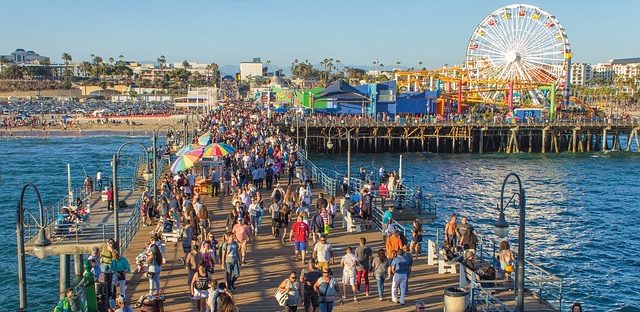
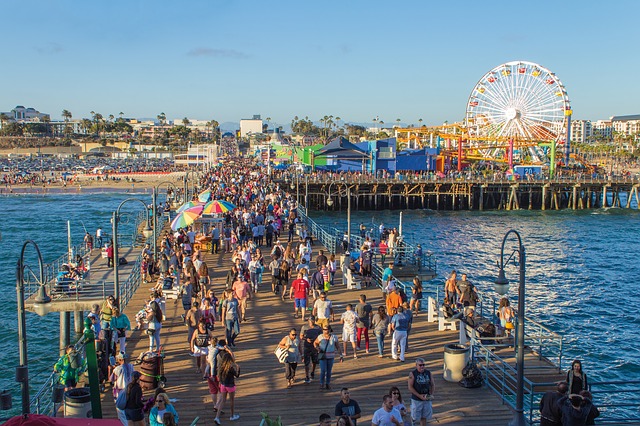
Santa Monica Pier, California, USA

  • Target: 100% renewable energy
  • Status: In progress
  • RES: Solar energy
  • Implementation: Santa Monica is a beach city in California USA. The city is taking action to achieve carbon neutrality by using electricity through renewable electricity sources. They are achieving this by giving residents and businesses the option to switch to renewable electricity though the Clean Power Alliance (CPA) of Southern California, a Community Choice Aggregation (CCA) program. 100 percent renewable energy will be the default product for all residential electricity customers in Santa Monica beginning in February 2019. This program will allow Santa Monicans to know where their power is coming from and be able to choose from multiple renewable options. This choice was not possible previously.  The new rates are expected to be on average between $56 and $72 more annually. Low-income qualified customers will receive the same discount on their rates and experience no net increase in cost compared to Southern California Edison (SCE) rates. Santa Monica City Council approved a '100 percent renewable energy tier' law whereby 100 percent renewable energy will be applied to all Santa Monica residents who do not choose to opt out. 50 percent and 36 percent renewable options will be available for residents who do opt out. The CPA is a Joint Power Authority consists of 31 public agencies across the region, who are working together to bring clean, renewable power choices to customers. The 100% Renewable Energy initiative is part of 'Santa Monica Green' program, which also includes other sustainability actions including public transportation and micro mobility, water conservation, compostable good waste collection, plastic ban, and organic food. (Via THRIVEGLOBAL)
  • Population: 89,736 (2010)
  • Area: 8.42 sq mi (21.80 km2)
  • Link: https://smspoke.org/2018/10/24/santa-monica-leads-again-with-clean-renewable-energy/
Santa Monica Pier, California, USA

Scituate, Massachusetts, USA

Scituate, Massachusetts, USA

  • Target: 100% renewable power for the municipality by end of 2013.
  • Status: Achieved
  • RES: One wind turbine and a 3 MW solar array.
  • Implementation: Scituate is a coastal town located between Boston and Plymouth in Massachusetts, USA. It achieve its target of 100% renewable electricity through local wind power and a 3 MW solar array, both constructed in 2012. The wind turbine was installed on town land through a joint venture between Palmer Capital and Solaya Energy. The town signed a 15-year contract to rent out the land and buy the electricity produced by the wind turbine.  In June 2013, the wind turbine was hit by lightening, causing it to go offline and then run partially during repairs. Until that time, the wind turbine had produced 22,000 kWh of power. When the solar array was constructed in 2012 over the town's capped landfill, it provided the additional backup energy. The 30 solar PV systems provided a total capacity of 115.2 kilowatts. Today, the town has 3 electric hybrid municipal vehicles and has installed a charging station at its Town Hall. The wind and solar projects are projected to bring the town US$500,000 per year in revenue, and to provide Scituate with the ability to offset debt service for new construction.
  • Population: 18,133 (2010)
  • Area: 31.8 sq mi (82.4 km2)
  • Link: https://www.scituatema.gov/community-profile-vision/pages/renewable-energy-plan-and-projects
Scituate, Massachusetts, USA

Šentrupert, Slovenia

Šentrupert, Slovenia

  • Target: 100% self-sufficient in terms of electricity and heating requirements by 2020
  • Status: In progress - 70% of energy demand for electricity and heating met from renewable sources. To date, wood biomass provides 90% of the entire heating requirements of the town. About 50% of the electricity demand of the town is covered by renewables, mainly hydro (39%), co-generation from wood biomass plant (10%) and solar PV (1%).
  • RES: Hydropower, cogeneration from biomass and solar PV.
  • Implementation: Since the Municipality of Šentrupert set its 100% target in 2007, it has been investing extensively on its energy supply. By 2009, the Council had adopted a Local Energy Concept which outlined energy efficiency measures, new energy solutions and how to increase general consumer awareness on energy issues. According to a corresponding Action Plan, an Energy Manager would be appointed to keep track of the energy supply and consumption levels (“energy accounting”) and to promote the use of renewable energy sources (RES) and energy efficiency measures (EE). The data gathered by the energy manager was particularly useful for the new biomass heating systems. First activities of the municipality was to improve the heating system of the school buildings of Šentrupert Elementary School as well as of the gym and new kindergarten. A new biomass boiler was installed in the school basement. In August 2010, the construction of the first energy efficient wooden building in Slovenia was completed. At the end of August 2014, a SEAP – Sustainable Energy Action Plan was confirmed by the council, with the aim to reduce CO2 emissions by 20 percent by 2020. The municipality was rewarded with the award En.občina 2012 for the most energy efficient municipality in 2012. In 2014, it won the award En.občina 2014 in the category of small municipalities and also became the winner among most energy efficient municipalities in 2014. In 2014, wood chip system was installed in the local prison complex for heating, and recently it was used to simultaneously produce electricity and heat. By sourcing wood chips from local producers of wooden boxes during the spring, savings in biomass purchases have amounted to 200,000 € per year. The council also constructed a greenhouse to produce 3000 tons of tomatoes per year on an area of 4.5–5 hectare to meet the needs for food self-sufficiency, especially with vegetables. The heat requirements for the greenhouse is  supplied by a public company Energetic Šentrupert, which is providing 50 new jobs.
  • Population: 310 (2017)
  • Area: 1.2 km2 (0.5 sq mi)
  • Link: https://www.renewables-networking.eu/documents/SI-Sentrupert.pdf
Šentrupert, Slovenia

Skellefteå, Sweden

Skellefteå city, Sweden

  • Target: 100% renewable electricity by 2020, 100% renewable heating by 2040
  • Status: In progress
  • RES: Hydropower, wind farms, bioenergy production, cogeneration, and district heating grids.
  • Implementation: The city of Skellefteå on Sweden’s Northeast coast has long been known for its gold and copper mining industry. Today it is better known for its production of renewable energy, first developed in the area in the early 1900s when Skellefteå’s municipally-owned energy company, Skellefteå Kraft (SK), first constructed hydroelectric dams to power the region’s mining. Since then, SK has become one of the top five renewable electricity producers in Sweden. As a municipally owned company, social priorities precedes commercial pursuits. Like the Swedish national government, SK has established ambitious 100% RE goals.

    Currently, 82.2% of SK’s production consists of renewable energy and SK plans to meet the targets by diversifying their electrical and energy production methods and increasing RE generation capacity by installing new technologies and upgrading existing ones. The municipal company at present operates hydroelectric dams, wind turbine farms, bioenergy production facilities, cogeneration facilities and district heating grids. The city also aims to be net exporters of bio, wind and hydro power by 2020. Skellefteå’s emphasis on RE has prompted the creation of renewable energy laboratories and research institutes. The municipality's reputation is attracting advanced technology development, such as Tesla who selected SK as electrical provider for their super charger stations in Sweden.
  • Population: 32,775 city, 72,025 urban (2010)
  • Area: 21.74 km2 (8.39 sq mi)
  • Link: https://smartcitysweden.com/companies/795/skelleftea-kraft/
Skellefteå city, Sweden

Sontra, Germany

Sontra, Germany

  • Target: 100% RE
  • Status: In progress - In 2011, 40% of the energy demand was from RE, with 242 RE installations integrated into the grid.
  • RES: Windpower, solar power, and EV-charging stations.
  • Implementation: The city of Sontra is located in the German state of Hessen. The city intends to produce its energy locally and ideally as close as possible to its consumers. It is focusing on electro mobility as part of its energy plan by establishing new EV-charging stations. A large photovoltaic plant was built at a new industrial park and new wind turbines were built with the participation of the local population. The key motivation for city to deploy RE technologies has been regional value creation, which plays an important role in influencing political action. In Sontra, the regional commitment to the transformation of the energy systems is a priority to counteract global climate change in an active and exemplary way.
  • Population: 7,856 (2017)
  • Area: 111.29 km2(42.97 sq mi)
Sontra, Germany

Stockholm, Sweden

Stockholm, Sweden

  • Target: Fossil free by 2050
  • Status: In progress
  • RES: District heating, renewable fuels in public transport, biogas, infrastructure for e-vehicles.
  • Implementation: The City of Stockholm in Sweden is implementing policies across all sectors in order to  reach the goal of zero CO2 emissions in the next 25 years. 

    The goal of becoming fossil fuel-free by 2050 was set in 2012. But by 2015, the city decided to push the target date up by 10 years, and now plans to run wholly on renewable energy by 2040. Its energy plan will rely on overall energy reduction and increase in renewable energy use. For instance, energy standards for new buildings built on city-owned land are to be 55 kWh/m2 compared with national standards of 80 kWh/m2. Similarly, the city aims to reduce energy use in the building sector by 50% between 1995 and 2050. By 2040, natural gas will be entirely phased out of the city’s energy grid and heating system, replaced primarily by biogas. The energy company that provides district heating has also decided to phase out fossil fuels by 2030. Increasing the use of renewable energy in transportation from 16% to 100% by 2040 will likely be the city’s most significant challenge, as this will entail removing all conventional fuel-powered vehicles from the city’s streets. To achieve this goal, the city plans to double the capacity of the public transport system, while improving walking and biking infrastructure. By removing all fossil fuel-burning cars from city streets by 2040, Stockholm expects to see reductions in air and noise pollution. Today, all inner city buses run on renewable fuels and all subways and commuter trains run on renewable electricity. All petrol sold in Stockholm contains 5% ethanol. Meanwhile, the City is working to increase the market share for biogas. It is also testing infrastructure for electric vehicles and plug-in hybrids. Building a fossil fuel-free city will create jobs within renewable fuel production, clean vehicles, technologies for building energy efficiency, and public transport infrastructure. Improving conditions for walking and biking will also be vital in achieving a 100% fossil fuel-free transport sector. These activities are bringing health benefits to Stockholm’s residents. Furthermore, 69% of households have access to district heating, and the share of renewable energy in district heating is nearly 70%.
  • Population: 960,031 city, 2,315,612 metro (2017)
  • Area: 188 km2 (73 sq mi) city, 6,519 km2(2,517 sq mi) metro
  • Link: https://international.stockholm.se/globalassets/rapporter/strategy-for-a-fossil-fuel-free-stockholm-by-2040.pdf
Stockholm, Sweden

Thisted, Denmark

Thisted, Denmark

  • Target: 100% self-sufficiency in electricity supply from renewable sources.
  • Status: Achieved
  • RES: Wind power, geothermal energy, biogas, solar photovoltaics, and district heating.
  • Implementation: The municipality of Thisted is located in the north-west section of Jutland region in Denmark. Today it is seen as a pioneer in the grassroots development of renewable energy based on decentralised energy. In fact, the successful transition towards 100% renewable electricity in Thisted was not the result of a political decision, but has its origins in the gradual expansion of private investments into the utilisation of renewable energy since the early 1980s. Today, all but one of the 252 wind turbines surrounding Thisted are privately owned. In total, 80% of Thisted’s total electricity demand is produced by wind power, while the remaining 20% are provided from biogas plants. Additional production of energy comes from privately owned solar power and geothermal plants that cover 85% of Thisted’s heating demand with renewables. Twisted is pursuing its energy goal based on an alliance of citizens, grassroots organisations and local companies, as well as the commitment of the municipal administration. The involvement of the community is particular key in providing the finance of the renewable energy systems. For example, many farmers have invested in wind power and these investments have paid off quickly, generating benefits after 6-7 years. Aside from the surplus energy that is sold and fed into the general grid, agricultural byproducts are able to be processed into bioethanol, biogas, or biopellets, constituting an additional energy supply from renewable sources. At the same time, Thisted’s citizens are saving one third of their energy costs for heating in comparison to oil-based heating systems. Thisted municipality has inspired innovation and has since established test centres for the development of new approaches in renewable energy production based on wave energy, as well as wind, solar and biogas. Moreover, the community plans to build a virtual power plant in order to be able to manage the decentralised energy supplies more efficiently, such as temporarily shifting the energy supply to the most economical production source.
  • Population: 43,993 (2016)
  • Area: 1,072 km²
  • Link: Thisted Municipality
Thisted, Denmark