Morgex, Italy

Morgex, Aosta Valley, Italy

  • Target: 100% renewable energy
  • Status: Achieved
  • RES: A hydropower plant, PV installations, biomass plants and a district heating system.
  • Implementation: Morgex is a small town located in the center of the Valdigna region in northern Italy. To date, the town supplies all of its electricity and heating requirements with renewable energy. To meet the demands of its electricity sector, the town is powered by a 1.1 MW hydropower plant that produces enough electricity for 1,100 families, and also by 9 photovoltaic installations totaling 112 kilowatts. Heat is obtained from biomass plants fed with locally grown wood. One plant installed in 2001 and expanded in 2005 has a capacity of 9 MW and a distribution system 10 kilometers long, which powers the local school and other town buildings.
  • Population: 1,989 (2006)
  • Area: 43 km2 (17 sq mi)
  • Link: Current Status of Energy Production from Solid Biomass in North-West Italy
Morgex, Aosta Valley, Italy

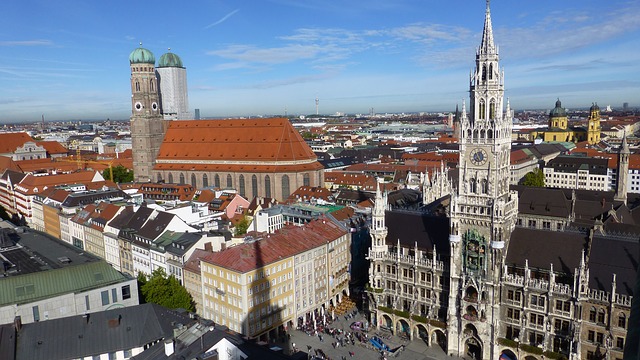
Munich, Germany

Munich, Germany

  • Target: 100 % of electricity demand from renewable energy sources by 2025.
  • Status: In progress
  • RES: Geothermal, hydropower, biomass and wind energy.
  • Implementation: The city of Munich in Germany today already produces 2.9 billion kWh per year from renewable sources, exceeding the demand of all private households. By 2025, the current share of 39% is projected to increase to 100% equalling to 7.5 billion kWh/year and requiring investments of roughly 9 billion €. While projects in Munich and its hinterland are prioritized, the electricity will be produced by power plants located in Germany and across Europe. Complimentary to the 100% target, the city plans to also supply 100% of long-distance heating from renewable sources. The energy will be harvested from geothermal energy as well as biomass and wind power. The city's goal is based on a longstanding history of introducing policies to increase the share of renewable energy. Back in 1982, the city council asked the administration to push the use of renewable energy. In 2007, it was decided that the share of renewable energy was to be increased by 5% until 2020. As it became clear that this goal could be outdone, the 100 % target was set. Throughout the process, citizens, city planners and craftsmen have influenced the development which has increased public support of the policy. A crucial aspect that made the fast advancement of renewable energy possible is the fact that Munich’s public utilities are entirely in public hands which enabled the city council to pursue their ambitious plan.
  • Population: 1,456,039 (2017)
  • Area: 310.43 km2 (119.86 sq mi)
  • Link: https://munichnow.com/munich-aims-for-100-green-energy-by-2025/
Munich, Germany

Mureck, Steiermark, Austria

Mureck, Austria

  • Target: 100% renewable energy
  • Status: Achieved
  • RES: Biodiesel plant, a biomass district heating system, a biogas plant and a photovoltaic plant.
  • Implementation: The region of Mureck/Steiermark is taking action against climate change. It is ensuring social stability and creating new jobs by focusing on renewable and decentralised energy. Today, the region exceeds its energy demand of heat, electricity and fuel by 160% through the generation and use of renewable energy. It is not only a self-sufficient but is also an energy exporter. The municipality Mureck produces energy from renewable sources via the Energy Co-operative SEEG and local energy providers Nahwärme Mureck GmbH, Ökostrom and SEBA. The providers run a biodiesel plant, a biomass district heating system, a biogas plant and a photovoltaic plant involving citizens. The SEEG makes biodiesel from rapeseed grown by about 500 regional farms, as well as from used cooking oil sourced from private households and restaurants. About 95% of Mureck’s total heat demand is covered by a 2-MW biomass heat boiler, waste heat from electricity generation and a 2-MW biogas peak load boiler. This system is run by Nahwärme Mureck GmbH.  The biogas co-generation plant generates 8,000 MWh of electricity annually as well as heat. It uses manure and by-products from biodiesel production in the production process. The 2,500 kWp citizen photovoltaic plant comprises a solar farm, panels on roofs, and a climate-friendly energy-generating glasshouse, where organic vegetables are grown.
    Through the use of renewable energy, Mureck achieves a reduction of about 60,000 t of CO2 and 20,000 t of crude oil per year. Mureck‘s energy cycle system has received three sustainable energy  awards – the World Energy Globe, the European Solar Prize and the Austrian Solar Prize. Since 1998 Mureck has been a member of the Climate Alliance Austria and in 2007 it was named the most innovative Austrian municipality.
  • Population: 1,597 (2016)
  • Area: 38.72 km2(14.95 sq mi)
  • Link: Mureck 100% Renewable
Mureck, Austria

Niestetal, Germany

Kirche Niestetal Heiligenrode, Germany

  • Target: Carbon neutral by 2034, and 100% renewable by 2050.
  • Status: In progress
  • RES: Solar, biomass, wind, geothermal and hydropower energy.
  • Implementation: The municipality of Niestetal is located in the district of Kassel in the state of Hesse, Germany. In 2012, a decision was made by the state to transition to 100% renewable energy by 2050. Four years earlier in 2008, motivated by the climate crisis, the people of Niestetal decided to commit to replacing all of their energy use with renewable resources. They would primarily source solar energy, and additionally biomass, wind, geothermal, and a small amount of hydropower. The target became the focus of the municipality's Integrated Climate Protection Plan launched in 2009. The plan contained around 20 measures that various community stakeholders can implement in order to reach the municipality's declared goal to become carbon neutral by 2034.
    Key to Niestetal's 100% renewable plan is to adopt high efficiency construction standards. With the support of public incentives that help bring down up front costs, five percent of the community's homes underwent energy efficiency retrofits from 2011-2013. Homeowners reportedly reduced their home energy requirement by 20-30% and their investment in the energy upgrades paid back within 5-6 years. Niestetal is utilizing the renewable energy expertise of several local companies and institutions,which include the University of Kassel, the energy research network deENet, and the international solar photovoltaic inverter and monitoring company SMA. SMA provides about 3000 local jobs, which helps add to the local value chain created by the renewable energy transition. Niestetal is one of four municipalities making up the German section of the Energy Region program, an EU funded cooperation between several European countries to further sustainable development of renewable energy.
  • Population: 11,030 (2017)
  • Area: 22.15 km2 (8.55 sq mi)
  • Link: (In German) https://www.niestetal.de/gv_niestetal/Bauen%20&%20Klimaschutz/Klimaschutz/Klimaschutzkonzept/integriertes%20klimaschutzkonzept%20fr%20die%20gemeinde%20niestetal.pdf
Kirche Niestetal Heiligenrode, Germany

Norman, Oklahoma, USA

Norman, Oklahoma, USA

  • Target: 100% renewable energy by 2050
  • Status: In progress
  • RES: Solar power
  • Implementation: Largely rural, the city of Norman is home to the University of Oklahoma, the state’s largest university. Since 2018, Norman had worked towards replacing its oil and gas dependency with natural wind and solar resources. The move towards 100% clean energy began when a franchise agreement between the city and its utility provider, Oklahoma Gas & Electric (OG&E) had expired which prompted activists to urge the city to transition to cleaner energy options. Fracking in the state had resulted in methane pollution, earthquakes, and water contamination. This also provide a strong impetus for increasing Oklahoma’s renewable energy generation and consumption. After a year long campaign, the volunteer-led team persuaded the city to commit to 100% clean, renewable energy across all sectors, including heat and transportation, by 2050. The resolution was voted unanimously in 2018 and made Norman the first city in Oklahoma to adopt such a goal.

    The Council acknowledged the environmental benefits, job opportunities, and economic advantages of renewable energy. There was strong cross-community support from environmental, commercial, educational, and faith groups. With its two utilities, OG&E (the primary utility) and OEC (a rural electric co-op), the city began determining its best options for moving to clean energy. The University of Oklahoma began using 100% renewable energy through the purchase of renewable energy credits. The city explored a solar program for its public schools and looked at updating its legislation to make the adoption of solar energy easier. A 2017 pilot program incentivized energy-efficient home building. The city included further plans to promote electric vehicles and greener building practices.
  • Population: 124,880 (2019)
  • Area: 189.4 sq mi (490.6 km2)
  • Link: https://www.sierraclub.org/press-releases/2019/03/norman-becomes-first-oklahoma-city-commit-100-percent-clean-renewable-energy
Norman, Oklahoma, USA

Orlando, Florida, USA

Orlando, Florida, USA

  • Target: 100% renewable electricity in city operations by 2030, community-wide by 2050
  • Status: In progress
  • RES: Solar PV
  • Implementation: In August 2017, Orlando’s City Council unanimously passed the resolution to transition to 100% clean energy target. It was led by Mayor Buddy Dyer, and supported by local organizations, including the League of Women Voters, IDEAS for Us, the NAACP, and Sierra Club. The coalition worked to secure a commitment to replace the city utility’s two remaining coal generation units with renewable sources. Solar farms were developed by the city with more planned for the future. In Orlando, the farms benefited from an average of 300 days of sunshine a year. One solar farm today powers Orlando’s city hall and police station.

    To address the upfront costs of solar infrastructure and concerns about availability, Orlando worked closely with its municipal utility, the Orlando Utilities Commission, to decarbonize its energy mix, expand the availability of solar energy, and create programs that reduce the upfront costs for consumers. The Community Solar program allowed residents and businesses to choose the source of their energy, with up to 100% coming from renewable sources, and Collective Solar, a cooperative model enabled homeowners to opt-in to rooftop solar at reduced costs. The PACE program was implemented, providing $500 million in clean energy financing to residents and businesses. The city worked to ensure a sustainable, clean energy economy by requiring that all new buildings be certified LEED Silver at minimum. Every new building must also be solar-ready or have the capacity to add on solar. Other steps taken included reducing the costs of solar, streamlining the new building permit process, implementing contractor training, and clearly defining solar-energy equipment in its energy code. Economic barriers to clean energy adoption is addressed through programs which subsidize the retrofitting homes of lower-income residents.
  • Population: 307,573 (2020)
  • Area: 119.08 sq mi (308.41 km2)
  • Link: https://www.orlando.gov/Initiatives/2018-Community-Action-Plan
Orlando, Florida, USA

Oslo, Norway

Oslo, Norway

  • Target: 100% renewable energy target in public transport and heating by 2020, reduce CO2 emissions by 50% below 1991 level by 2030, and become carbon neutral in 2050.
  • Status: In progress -  In 2014, 60% of the energy used by the city to power the public transport system was sourced from hydroelectric power.
  • RES: Hydropower, biogas, Passive House buildings, and hydrogen and electric vehicles.
  • Implementation: Oslo is Norway’s capital and is the most populous city. It aims to achieve 100% RE through its Energy Action Plan, built on previous initiatives by the city such as the municipal Energy and Climate Fund, which was implemented in 1982. Thanks to a compact urban fabric and a high share of public transport use (62% in 2010), Oslo per capita CO2 emissions is already one of the lowest in Scandinavia (around 2,3 tonnes in 2007). Heating and transportation account for the highest share of CO2 emissions. The city aims to increase the share of fossil-free hydrogen powered vehicles in the city’s operators fleet by 2020 to reach its 100% target. Although the city does not own any vehicles itself, Oslo municipality and Akershus County Council does own the transport management company, Ruter AS. This enables the two public bodies to  influence the decisions of operators. In 2014, the City of Oslo in cooperation with the surrounding regional government of Akershus County approved a Regional Hydrogen Strategy to reinforce the target set, and are working together to develop an infrastructure with biogas, hydrogen and electric vehicles. Reducing emissions in the heating of city buildings is another priority. By 2013 all municipal buildings were using 100% renewable energy, and from 2014 all new municipal buildings had to be of Passive House construction. Today, the city’s heating system is powered by 80% renewable energy, mainly from sourced from residual waste biomass. In 2010, FutureBuilt, a ten-year program, was launched by Oslo and 3 municipalities part Oslo’s Region to stimulate climate friendly urban development. 37 pilot projects, including  private and public buildings as well as urban areas, were developed in 2015.
  • Population: 673,469 (2018)
  • Area: 480.76 km2 (185.62 sq mi)
Oslo, Norway

Palmerston North, NZ

Square Edge, Palmerston North, NZ

  • Target: 100% RE city by 2015.
  • Status: In progress
  • RES: 3 wind farms (286 turbines), 4 mini-hydro turbines, bio-gas production, 100kW solar arrays, solar hot water heaters, insulation and hot water heat pumps.
  • Implementation: The city of Palmerston North is located near the southern end of New Zealand’s North Island. In 2011, the Palmerston North City Council (PNCC) began developing plans to become a 100% RE city. This goal was possible since wind farm development in the area had already begun in 1999, with three wind farms, including New Zealand’s largest, Tararua Wind Farm. Since 1999, a total of 286 turbines have been installed, with a combined annual capacity of approximately 300 MW, providing the city with access to renewable wind power. In addition to sourcing local wind power, the PNCC has invested in several other renewable generation projects. The installation of 4 mini-hydro turbines created enough energy to power the waste water treatment plant. The waste water treatment plant has also been retrofitted with technology allowing for the use of the waste water treatment’s bio-sludge for bio-gas production. The bio-gas produced from this process is used as a peak demand generator, capable of producing up to 75% of the city’s peak electrical demands. The PNCC has also installed a 100kW solar array on the roofs of the PNCC Central Administration Building and the City’s Convention Centre. As part of the city’s ongoing green house gas emission reduction plans, there are established financial assistance programs for improving the efficiency of residential properties. These financial assistance programs provide partial funding for solar hot water heaters, insulation and hot water heat pumps where applicable.
  • Population: 88,700 (2018)
  • Area: 395 km2 (153 sq mi)
  • Link: https://www.stuff.co.nz/manawatu-standard/news/107703079/palmerston-north-could-lead-use-of-renewable-energy
Square Edge, Palmerston North, NZ

Palo Alto, California, USA

Palo Alto, California, USA

  • Target: 100% renewable electricity supply
  • Status: In progress
  • RES: Large scale solar
  • Implementation: In July 2013, Palo Alto voted to make the city’s electricity supply 100% renewable as part of the city’s commitment to carbon neutrality.  As a precursor to this decision, the local Department of Utilities first offered a 100% renewable electricity plan.  The 100% renewable power option was to be entirely supplied by solar RECs (renewable energy certificates).  In 2015, the state of California adopted a new Renewable Portfolio Standard (RPS), requiring that all utilities in the state should supply 50% of their retail electric sales from eligible renewable resources by 2030.  Those enrolled in the renewable power option have been mostly residential customers (95%), and the rest being commercial customers. Currently, Palo Alto is powered by several large-scale solar projects. The City Council has a Carbon Neutral Electric Resource Plan which commits Palo Alto to using carbon neutral electric resources.  The Plan is designed to be transparent, credible, sustainable, inspirational and replicable. In keeping with the City’s efforts to combat climate change, the plan effectively eliminates all greenhouse gas (GHG) emissions from the City’s electric portfolio. The Plan's strategy was two-fold. First, between 2013 and 2016, the City would purchase short-term renewable resources and/or renewable energy certificates (RECs) to supplement existing and committed long-term renewable and hydroelectric resources, which account for 65% to 83% of the portfolio. And second, beyond 2016, long-term renewable resources will provide about a 50% RPS level within the existing 0.5 ₵/kWh annual RPS rate limit. Since about 50% of the electric supply portfolio is already sourced from carbon-free hydroelectric resources, the additional cost of achieving carbon neutrality between 2017 and 2020 is calculated to be very small.
  • Population: 67,024 (2016)
  • Area: 25.77 sq mi (66.75 km2)
  • Link: Palo Alto Sustainability
Palo Alto, California, USA

Park City, Utah, USA

Park City, Utah, USA

  • Target: 100% renewable electricity for city operations by 2022, and for the whole community by 2032.
  • Status: In progress
  • RES: Solar energy
  • Implementation: Park City is a small town located in the Rocky Mountains of Utah, and is renowned for its ski resorts and Sundance Film Festival. In October 2016, its Mayor signed on to the Climate Reality Project's 100% renewable electricity campaign, which commits the city to achieving a 100% renewable electricity supply for the community by 2032. The pledge was driven by concerns about the impact on the community of a warming climate and a desire to show that mountain communities can lead the way on transitioning to renewables.
  • Population: 8,378 (2017)
  • Area: 17.567 sq mi (45.50 km2)
  • Link: Park City Renewable Energy
Park City, Utah, USA